


Natural makeup looks have one job: to make you look like yourself, only a bit more rested. The trick is that “natural” is not the same as “nothing”. It is a small set of choices — skin that still looks like skin, brows that keep their shape, a flush that could be real, lips that match your own colour — done lightly enough that nobody can point to a single product. Get it right and people say you look well, not that your makeup looks good. That is the whole point.
We like natural makeup because it is forgiving. It works for work, for weekends, for days when you have five minutes and days when you have fifteen. And it survives real life — daylight, office lighting, a long lunch — better than a heavy look that starts to show its edges by midday.
Skin first, makeup second
Every good natural look starts before any makeup goes on. Clean, moisturised skin takes a sheer base far better than dry or rushed skin does, and it is the reason two people can use the same tinted moisturiser and get completely different results.
Keep the prep simple: cleanse, moisturise, sunscreen. In winter, when skin is drier and tighter, that prep matters even more — our winter skincare routine covers the order that works when cold air is doing its worst. Wait a minute or two after moisturiser before you start on base, so the makeup sits on skin rather than sliding around on damp cream.
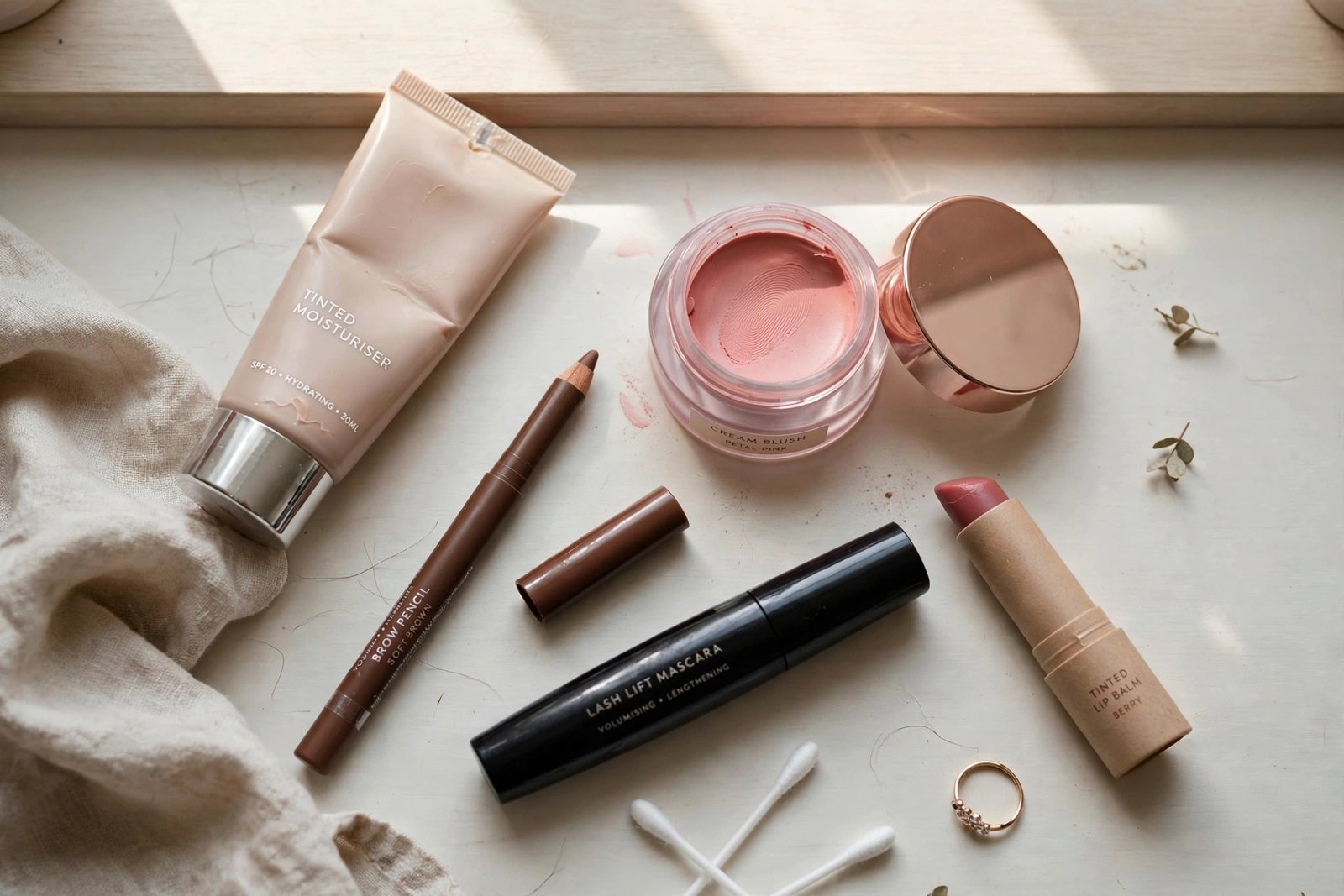
The base: sheer, not heavy
The biggest mistake in natural makeup is reaching for full-coverage foundation. It hides the very texture that makes skin look real, and in daylight it reads as makeup from a mile away.
Instead, try this order:
- Tinted moisturiser or skin tint. A thin layer, blended with fingers or a damp sponge, from the centre of the face outward. The goal is to even out tone, not to erase it.
- Concealer only where needed. Under the eyes, around the nose, on a blemish or a patch of redness. A small amount, tapped in with a fingertip, beats a thick layer every time.
- Powder only where you shine. If you have oily patches, a light dusting of translucent powder on the T-zone is enough. Skip powder on dry areas — it is what turns a natural look chalky.
One test that never fails: step back from the mirror and look at your face in daylight, not bathroom light. If you can see where the base starts and stops, blend more. If your freckles and moles have vanished, you have used too much.
Eyes, brows and the flush
With the base done, the rest is about small amounts in the right places.
Brows. Brush them up, fill only the sparse spots with short strokes that follow your natural shape, and set with a clear gel if they wander. Brows frame the whole face, and overdrawn brows are the fastest way to break a natural look.
Eyes. One soft wash of colour — a taupe, soft brown or warm beige — swept over the lid and blended at the edges. Brown liner, smudged close to the lashes, looks softer than black. One coat of mascara, top lashes only if you want it truly minimal, wiggled at the roots so lashes separate instead of clumping.
Cheeks. Cream blush beats powder blush for a natural finish, because it melts into skin instead of sitting on top of it. Smile gently, tap a rose or peach shade onto the apples of your cheeks, and blend upward toward your temples. The colour should match the flush you get after a walk in cold air — if it looks brighter than that, you have used too much.
Lips. A tinted balm, a sheer lipstick or a lip stain in a shade close to your own lip colour. Apply it with a finger for the softest edge, or straight from the bullet and then blot once. The aim is colour that looks like it belongs to you.
The 5-minute and 10-minute versions
Natural makeup should fit your morning, not the other way round. Here is how we split it:
| Step | 5-minute version | 10-minute version |
|---|---|---|
| Skin | Moisturiser + sunscreen | Moisturiser + sunscreen + primer on the T-zone |
| Base | Tinted moisturiser, fingers | Skin tint + spot concealer, sponge |
| Brows | Brush through, fill gaps only | Brush, fill, set with clear gel |
| Eyes | One coat of mascara | Soft shadow wash + brown liner + mascara |
| Cheeks and lips | Cream blush tapped on, tinted balm | Cream blush blended up, sheer lipstick blotted |
The 5-minute version is a real look, not a half-done one. It covers the three things that matter most — even tone, defined brows and a bit of colour — and it is the version we reach for most days ourselves.
Shade matching without the guesswork
Two shade mistakes ruin more natural looks than any technique error:
- Base too light or too pink. Test a tint on your jawline in daylight, not on your hand and not under shop lights. The right shade disappears into your neck. If you can see an edge, it is wrong.
- Blush too bright or too orange. Hold the blush next to your inner lip colour. Shades close to that — rose, soft peach, muted berry — almost always look natural. Neon pinks and strong oranges rarely do.
And one rule for winter: your summer shade will probably be too dark by January. Skin lightens in winter, and a base that matched in August can look like a mask by December. Check your shade when the seasons change, not just when you run out.
Mistakes that make “natural” look like makeup
- Too much powder. It settles into fine lines and dry patches and turns skin matte in a way real skin never is.
- Heavy concealer under the eyes. Thick, light concealer draws attention to the very area you want to soften. Less product, well blended, wins.
- Black liner on the waterline. It shrinks the eyes and reads as evening makeup. Brown, smudged on the top lash line, keeps things soft.
- Overfilled brows. A brow that starts too dark and square at the inner corner looks drawn on. Keep the inner corner lightest and build colour toward the tail.
- Skipping sunscreen. Natural makeup is about healthy-looking skin, and nothing protects that better over time than daily SPF, even in grey weather.
FAQ
What products do I need for a natural makeup look?
A tinted moisturiser or skin tint, a concealer, a cream blush, a brow pencil or powder, mascara and a tinted lip balm. That small set covers the whole look.
How do I make natural makeup last all day?
Prep skin well, use thin layers, and set only the areas that shine with a light translucent powder. A setting spray helps, but thin layers matter more than any spray.
Should natural makeup include eyeliner?
It can, but keep it soft. A brown liner smudged close to the top lashes adds definition without looking like evening makeup. Skip harsh black lines for daytime.
What is the difference between “no makeup” makeup and natural makeup?
Very little — both aim for skin that looks like skin. “No makeup” makeup is usually the lighter end of natural makeup: sheerer base, less eye definition, colour that matches your own tones.
Can I wear natural makeup in winter?
Yes, and it often looks better in winter, when skin needs moisture. Use a creamier base, skip heavy powder, and keep lips protected with a tinted balm.
Which step do you always skip when you are in a rush — the brows, the blush, or the mascara? Tell us in the comments, and we will build our next Beauty guide around the routines you actually have time for. More seasonal edits are waiting at Favorite Magazine.