

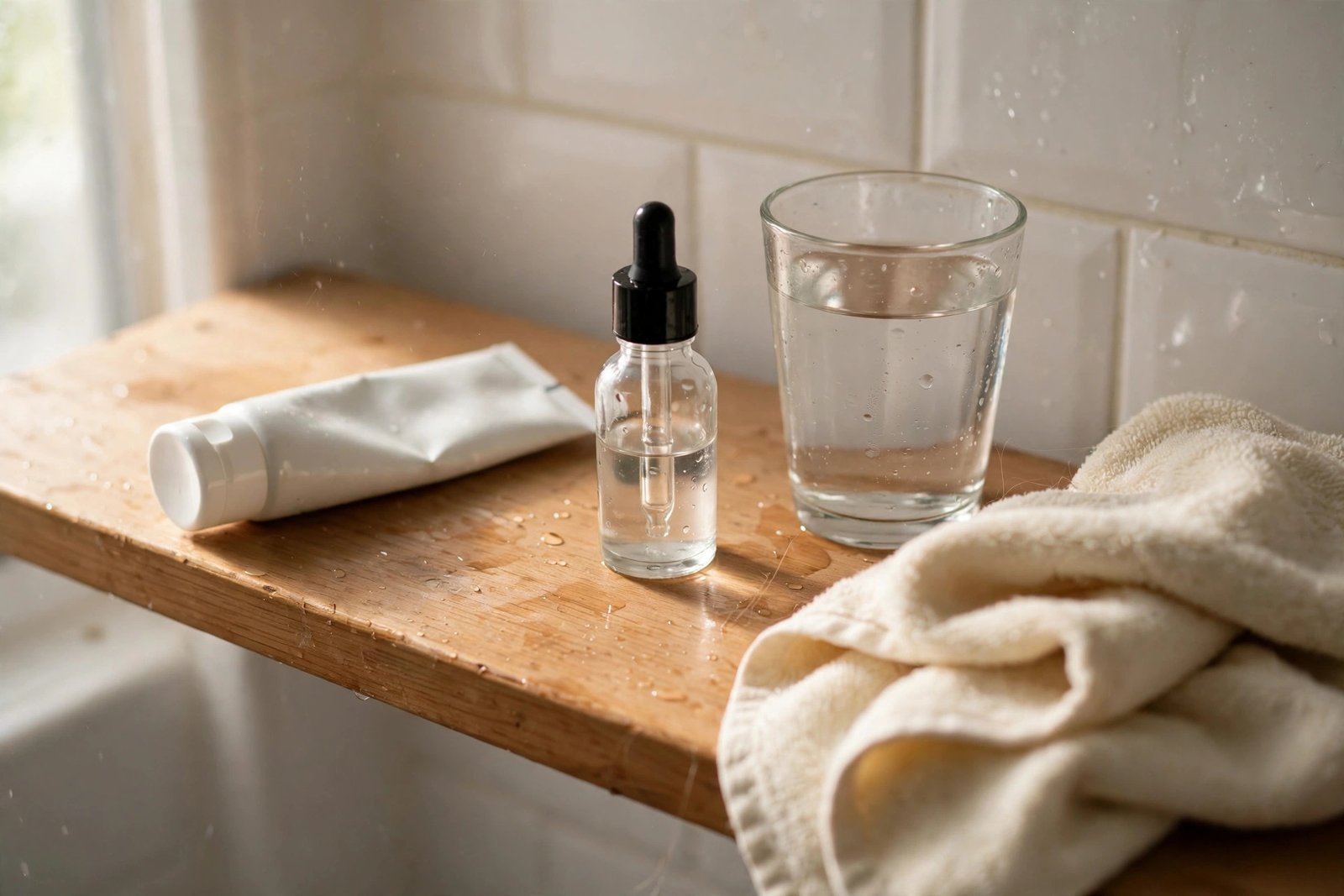
A good winter skincare routine is simpler than most people think: a gentle cleanser, a hydrating serum applied to damp skin, a richer moisturiser to seal it in, and sunscreen every morning — even when it is grey outside. Add lukewarm showers, lip care and a humidifier at home, and you have covered most of what cold weather does to skin. The goal is not ten new products. It is protecting the skin barrier you already have.
We write about beauty the same way we write about fashion: what actually works, what is worth your money, and what you can skip. Winter skin is a practical problem — tightness, flaking, chapped lips, red patches — and it mostly comes from two things: cold, dry air outside and warm, dry air inside. Your routine just needs to answer both.
Why winter changes your skin
Cold air holds less moisture than warm air, so it pulls water from your skin. Indoor heating makes it worse by drying the air further. Hot showers feel wonderful in January, but they strip the natural oils that keep skin comfortable. Put together, that is why skin that was fine in September feels tight and flaky by December.
Even oily skin is not exempt. When skin loses water, it can overproduce oil to compensate, which is why some people get both dry patches and breakouts in winter. The answer in both cases is the same: gentle care and steady moisture, not harsher products.
The morning routine
Keep it short. Four steps, done in this order:
- Cleanse gently. Lukewarm water and a creamy or milky cleanser, or just water if your skin feels very dry. Foaming cleansers that worked in summer can feel too stripping now.
- Serum on damp skin. A hydrating serum goes on while skin is still slightly damp from cleansing. This helps it hold on to moisture rather than sitting on top of dry skin.
- Moisturiser. A cream rather than a light lotion in winter. It seals in the serum and protects against the cold on your way out.
- Sunscreen. Every morning, even in grey weather. UV rays pass through cloud, and winter sun reflecting off wet pavements still reaches your skin. A moisturiser with SPF counts if it is broad spectrum and you use enough of it.
That is the whole morning. If you wear makeup, it goes on after sunscreen, and winter is a good time to check whether your foundation is sitting well on moisturised skin rather than clinging to dry patches.
The evening routine
Evenings are when you can be a little more generous:
- Remove the day. A gentle cleansing balm or milky cleanser takes off sunscreen and makeup without scrubbing. Pat dry with a soft towel — do not rub.
- Serum again. The same hydrating serum, or a soothing one if your skin feels irritated.
- A richer night cream. Night is when skin repairs, and a heavier cream gives it something to work with. If your skin feels very tight, a thin layer of a plain occlusive balm over the cream on the driest areas can help seal moisture in overnight.
- Lip care. A plain, fragrance-free lip balm before bed. Lips have no oil glands of their own, which is why they chap first and worst.
If you use strong active products — high-strength retinoids or exfoliating acids — winter is the time to ease off rather than push harder. Use them less often, buffer them with moisturiser, and stop if your skin stings or peels. Gentle and consistent beats aggressive and interrupted.
Ingredients that help
| Ingredient | What it does | Look for it in |
|---|---|---|
| Hyaluronic acid | Draws water into the skin | Serums, applied to damp skin |
| Glycerin | A classic humectant that holds moisture | Cleansers, creams, serums |
| Ceramides | Support the skin barrier and slow water loss | Rich moisturisers, barrier creams |
| Squalane | A light oil that mimics skin’s own moisture | Facial oils, richer creams |
| Niacinamide | Calms redness and supports the barrier | Serums, moisturisers |
You do not need all five. A serum with one or two humectants and a moisturiser with ceramides covers most winter needs. For a deeper look at how dermatologists frame the season, this winter skin care guide covers the same ground in more clinical detail.
Hands, lips and body
Faces get all the attention, but winter is hardest on hands and lips:
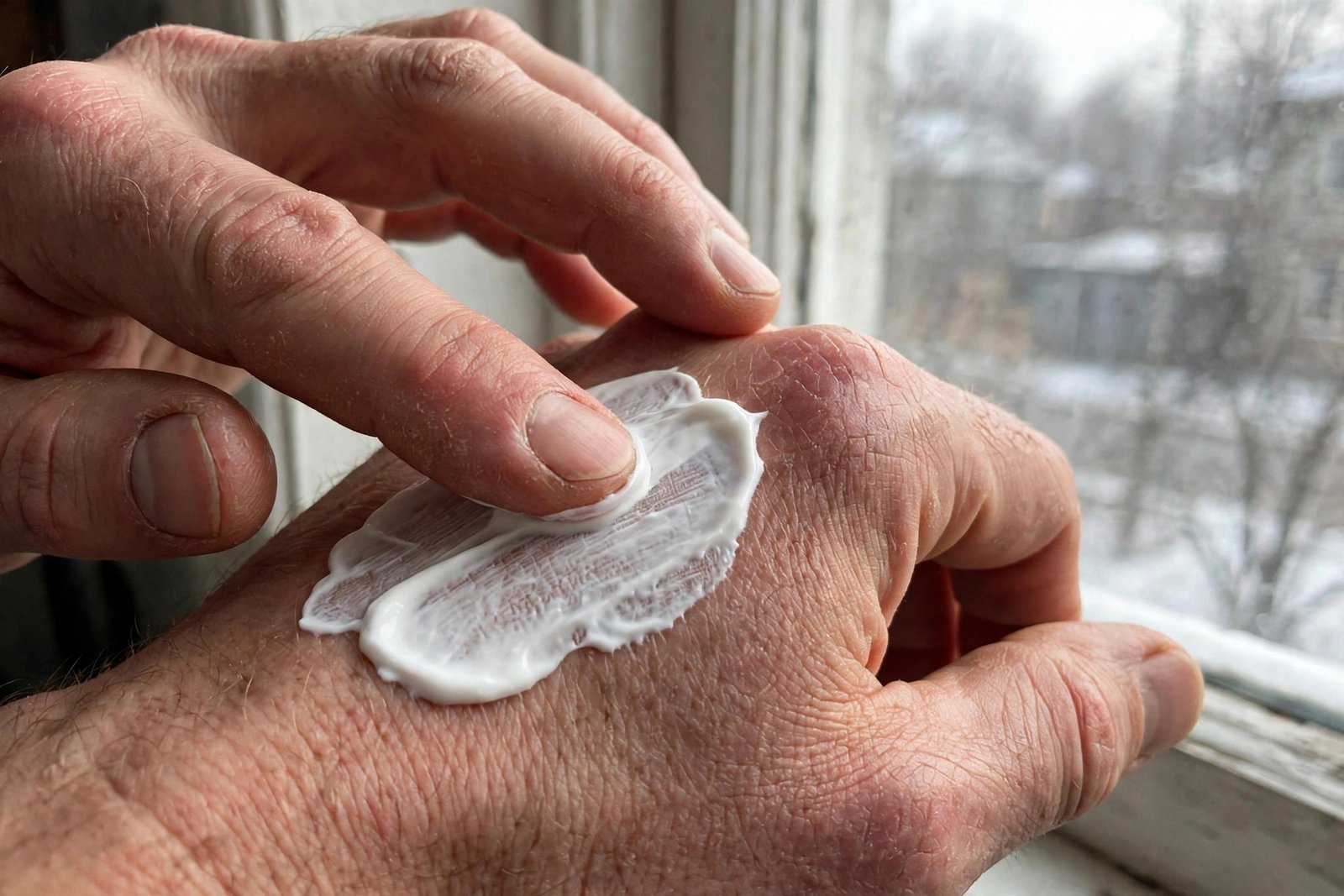
- Hands: Wear gloves outside, and keep a hand cream by the sink and in your bag. Dishwashing without gloves is one of the fastest ways to wreck winter hands.
- Lips: Carry a plain balm and use it before you need it, not after your lips have already cracked. Flavoured or fragranced balms can irritate already sore lips.
- Body: Short, lukewarm showers instead of long hot ones, and moisturiser straight after, while skin is still damp. A body lotion with glycerin or ceramides does the job without needing anything fancy.
The habits that matter as much as the products
- Shorter, cooler showers. Hot water feels good and dries skin out. Lukewarm and brief is the kindest option.
- A humidifier at home. If your heating dries the air, a humidifier in the bedroom makes a real difference to overnight skin and to how you wake up feeling.
- Soft touch. Use your hands rather than rough cloths or scrubs on dry skin, and choose unscented products labelled for sensitive skin if you flare easily.
- Water and sleep. Neither replaces moisturiser, but both show up in your skin. Winter is a good time to be honest about both.
When to see a dermatologist
Most winter dryness settles with gentler care and steady moisture. See a dermatologist if dryness does not improve after a few weeks of a careful routine, if skin cracks and bleeds, if itching keeps you awake, or if you have a condition like eczema or psoriasis that flares in winter. Those are not problems to push through with stronger shop-bought products — they are worth a proper conversation with a professional. Nothing in this guide replaces that advice.
FAQ
What is the best winter skincare routine for dry skin?
A gentle creamy cleanser, a hydrating serum on damp skin, a rich ceramide moisturiser and daily SPF in the morning, with a richer cream and lip care at night. Keep showers lukewarm and short.
Do I need sunscreen in winter?
Yes. UV rays pass through cloud and reflect off wet ground, so skin is still exposed on grey days. A broad-spectrum SPF every morning is the simplest year-round habit.
Should I exfoliate in winter?
Less often and more gently than in summer. Over-exfoliating dry winter skin makes tightness and redness worse. Once a week with a gentle product is plenty for most people.
Why do my lips chap so much in winter?
Lips have no oil glands, so cold air and indoor heating dry them faster than the rest of your face. A plain, fragrance-free balm used regularly — before lips crack — works better than any treatment applied after.
Does oily skin need moisturiser in winter?
Yes. Winter air dehydrates all skin types, and dehydrated oily skin can overproduce oil. A light, non-comedogenic moisturiser keeps the barrier healthy without adding heaviness.
What is the one winter skin problem that bothers you most — tightness, flaking, chapped lips or redness? We shape our Beauty guides around your answers, and you can find the rest of our seasonal coverage at Favorite Magazine.