

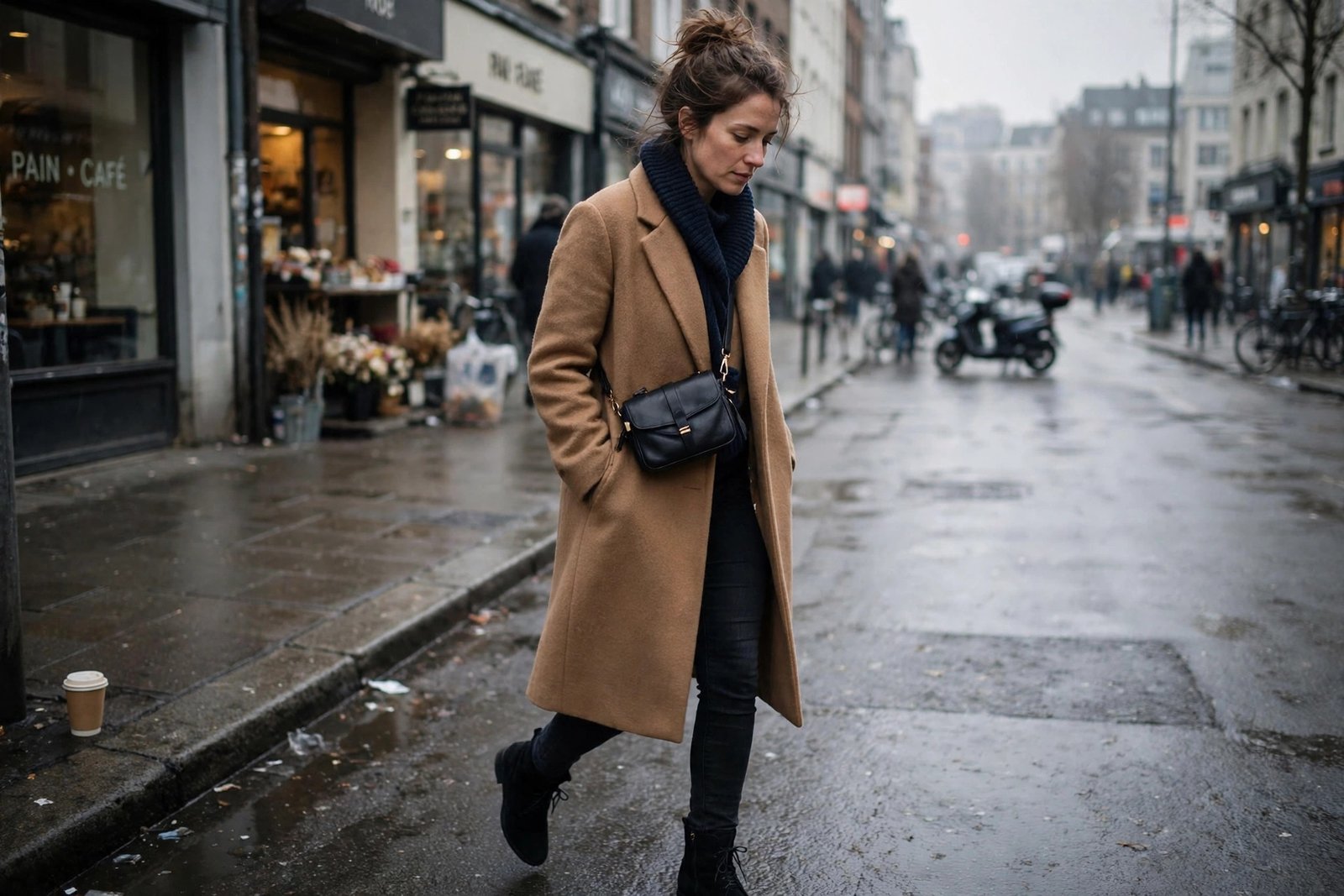
Winter coat styles all promise the same thing — warmth — but they do very different jobs once you leave the house. A long wool coat carries you through work, dinners and smart days. A puffer handles school runs, wet pavements and cold weekends. A parka covers the worst weather. The mistake most of us make is buying the coat that looks best on a model, instead of the coat that fits the life we actually live. This guide sorts the main styles by the job they do, so you buy the right one first.
We have owned nearly all of these, and the coats we still reach for are rarely the most dramatic ones. They are the ones that fit over what we already wear and keep us warm on a real commute.
Start with your winter, not the shop window
Before you look at styles, answer three honest questions:
- How cold does it really get where you live — frosty mornings, or deep, wet, windy winter?
- How much of your week is walking outside versus driving or taking the bus?
- Do you need one coat for everything, or can you keep a smart one and a casual one?
A person who walks twenty minutes to work in rain needs something different from someone who drives everywhere. Be honest about the walking, because that is where a coat earns its money.
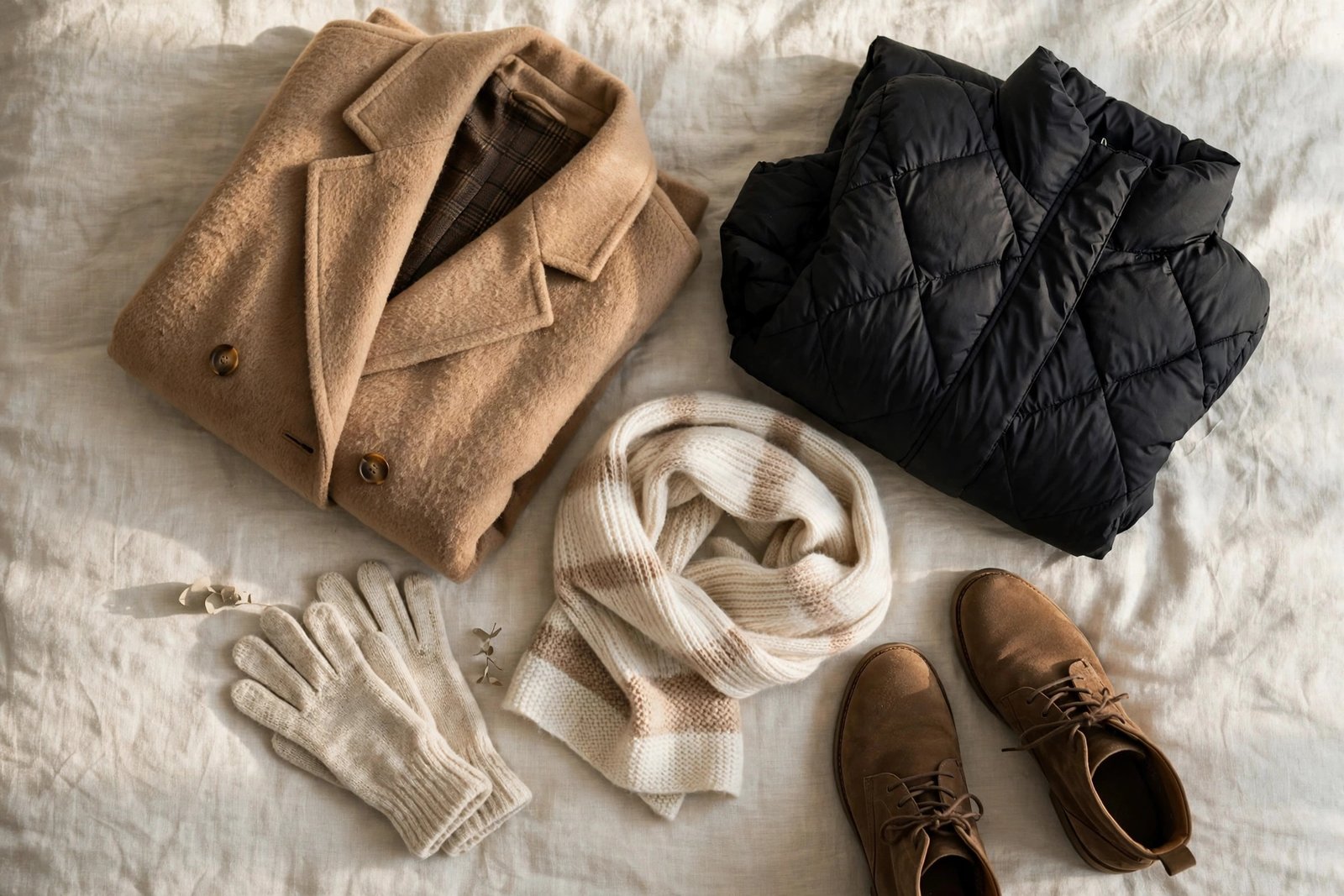
The 6 main winter coat styles
| Coat style | Best for | Warmth | Watch out for |
|---|---|---|---|
| Long wool coat | Work, smart days, evenings out | Good with layers | Not waterproof; needs a scarf and gloves in deep cold |
| Puffer jacket | Everyday, weekends, wet cold days | Very warm, especially long lengths | Can look bulky; short ones leave legs cold |
| Parka | Worst weather, long walks, snow and rain | Excellent, often hooded and waterproof | Heavy; can swamp a smart outfit |
| Trench coat (winter weight) | Mild winters, rainy days, smart casual | Moderate; needs knit layers | Too light alone in freezing weather |
| Faux fur coat | Evenings, weekends, statement days | Warm, but wind can cut through | Bulky to store; not for wet weather |
| Peacoat | Smart casual, shorter days out | Good for mild to cold days | Short length means cold legs on long walks |
The long wool coat: the one to buy first
If you can only own one winter coat, make it a long wool coat in camel, charcoal or black. It goes over dresses, jeans, tailoring and knitwear without changing the outfit underneath, and it never dates. That is why it appears in our winter fashion trends coverage year after year.
Fit matters more than brand here. The shoulders should sit at your shoulder edge, not droop. The coat should close over a knit without pulling. The length should cover a dress hem and keep your legs warm — a coat that stops awkwardly at the knee helps nobody. And test it sitting down, because a coat you cannot sit in is a coat you will stop wearing.
The puffer: warmth without the fuss
Puffers are the warmest option for the money, and the modern ones look far better than the shapeless versions of a decade ago. A cropped puffer suits high-waisted jeans and wide trousers. A long puffer is the closest thing to wearing a duvet, and on a freezing day that is a compliment.
Two things to check: the hood, and the filling. A good hood that actually stays up in wind is worth more than an extra pocket. And a puffer that packs down small is handy for travel, but the warmest ones are usually the ones with a bit of weight to them. Buy the puffer for your coldest, most practical days, not as your only coat — it will never look right over tailoring.
Parkas, trenches and faux fur
A parka is the coat for weather you cannot avoid: long walks, rain, wind, wet snow. Look for a waterproof outer, a real hood and pockets you can actually use with gloves on. It will not be your prettiest coat, and that is fine — it is your most useful one.
A winter-weight trench works when your winters are mild and wet rather than freezing. The belt gives shape that unstructured coats lack, and a wool or quilted lining takes it further into the season. On its own in a hard frost, though, it will let you down.
Faux fur is the fun one. It looks best when everything underneath is quiet — dark jeans, a plain knit, simple boots. Keep it for evenings and weekends rather than daily commuting, because it is bulky to store and does not love rain.
How to choose: match the coat to the day
Here is the shortcut we use when someone asks us which coat to buy:
- Mostly work and smart days: long wool coat first, peacoat second.
- Mostly walking, kids, dogs, errands: long puffer first, parka second.
- Mild, wet winters: winter-weight trench first, wool coat second.
- One coat for everything: a long wool coat in a dark neutral, with a warm scarf and gloves doing the extra work on the coldest days.
And if you already own a good wool coat, the best second coat is usually the opposite of it: a puffer if your wool coat is smart, a parka if your winters are wet, a faux fur if your life needs a little more fun.
Layering under a coat
A coat only works if what goes under it fits. A good rule: the coat should close over your thickest normal knit without pulling at the buttons. If it does not, size up or choose a coat with a relaxed cut.
For warmth without bulk, layer in this order: a thin thermal or fitted tee, a fine knit, then the coat. A blazer under a wool coat adds structure and means you still look put together when the coat comes off indoors — we cover that trick in our guide to how to style a blazer. Scarves, gloves and a hat do more for warmth than most people expect, and they are far cheaper than a new coat.
Mistakes that waste coat money
- Buying for a holiday, not your winter. A coat for one snowy trip is not a coat for three months of ordinary cold.
- Ignoring the shoulders. Like a blazer, a coat with wrong shoulders cannot be fixed. Get that right first.
- Choosing dry-clean-only everything. If you wear a coat daily, check the care label. Some wool coats cope with a lot more than their labels suggest, but a coat you are afraid to wear is money wasted.
- One coat in a loud colour as your only coat. A red or plum coat is wonderful as a second coat. As your only coat, it limits every outfit for months.
FAQ
Which winter coat style is warmest?
A long parka or a long puffer, both with a hood, usually wins for pure warmth. A wool coat comes close when layered with a good knit, scarf and gloves.
What colour winter coat should I buy first?
Camel, charcoal or black. They go with everything you already own, and they hide winter wear better than pale colours.
How long should a winter coat be?
Long enough to cover a dress hem and keep your legs warm — usually below the knee for a main winter coat. Shorter coats suit milder days and shorter outings.
Are puffer jackets still in style?
Yes, especially longer lengths and cropped, boxy shapes. They work best as the casual coat in your wardrobe rather than the only coat.
Can I wear a wool coat in rain?
Light rain, yes — wool copes with a shower. Heavy, steady rain will soak it, so keep a parka or a waterproof coat for wet days.
Which coat does your winter actually need — the smart wool one, the practical puffer, or the weather-beating parka? Tell us in the comments, and we will build next week’s Fashion picks around your answers. More seasonal edits are waiting at Favorite Magazine.