

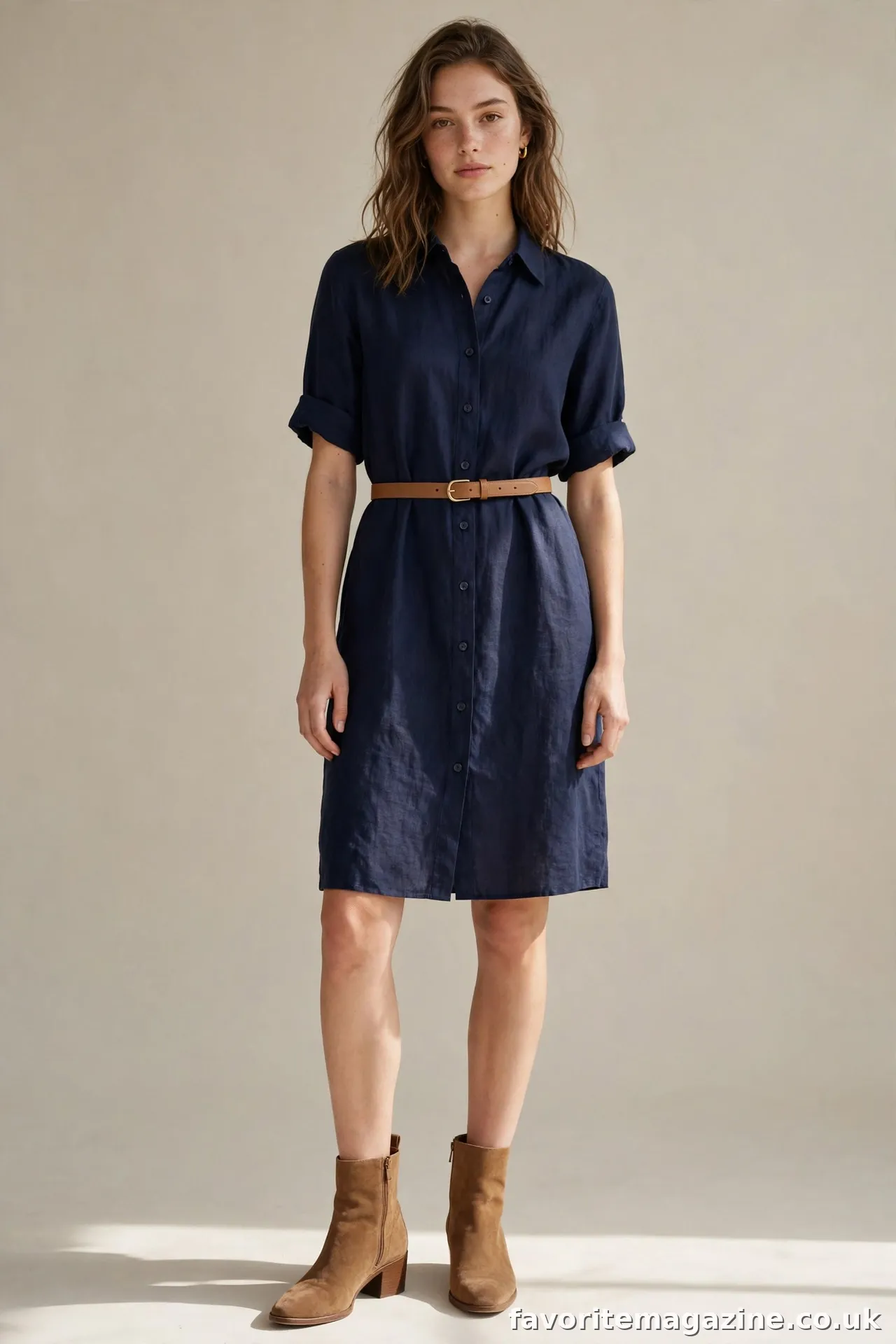
A shirt dress is a dress cut like a shirt — a collar, a button front, and usually a waist you can define or leave loose. It is one of the easiest dresses to wear, because the shape does most of the work for you. The quickest way to style one is to pick a length that hits at or just above the knee, add a slim belt at your natural waist, and finish with ankle boots or clean trainers. That is the whole outfit, and it takes about two minutes to put together.
Everything in this guide builds on that simple base. Here is what actually works, in real life rather than just in a photo.
What Is a Shirt Dress, Exactly?
A shirt dress takes the top half of a classic shirt — collar, buttons, sometimes a chest pocket — and extends it into a skirt. The waist can be fitted with a belt or a tie, or left loose for a straighter shape. The skirt can be straight, slightly flared, or full, and the length usually runs from just above the knee to mid-calf.
The reason the shirt dress has stayed popular is simple: it is one piece that looks like an outfit. You do not have to match a top to a bottom, and the collar gives it structure, so even a plain cotton version looks put together. A shirt dress can look smart or relaxed depending on what you pair it with, which is why one dress can cover so many occasions.
It also suits most body types, because you control the waist. Belt it for definition, leave it loose for comfort, or half-tuck the front into jeans for a completely different look — the shirt dress is more flexible than it looks.
Choosing the Right Shirt Dress
Before the styling, the dress itself has to be right. Three things matter most: fit, length, and fabric.
Fit
The shoulders should sit where your shoulders actually are — not drooping down the arm, and not pulling across the chest. The buttons should lie flat when the dress is done up. If they gape, the dress is too small across the bust, and no amount of styling fixes that. Go up a size and belt the waist instead.
The waist is where you have the most choice. A dress with a built-in tie lets you cinch it as tight or as loose as you like. A dress with no tie can be belted with your own belt, which is often better, because you can pick the width and colour.
Length
- Above the knee is the most versatile length. It works with boots, trainers, and sandals, and it suits most heights.
- At the knee is the safest choice for work. It reads smart without trying too hard.
- Mid-calf suits taller frames best, and it looks elegant with a heeled boot. On a shorter frame it can shorten the legs, so wear it with a heel or a pointed shoe.
Fabric
Cotton and cotton poplin are the easiest fabrics for a shirt dress — they hold the collar shape and feel comfortable all day. Linen looks relaxed and works well in warm weather, but it creases, so accept that before you buy it. A fluid fabric like viscose or tencel drapes softly and suits a looser, longer shirt dress. Stiff, shiny fabrics tend to look less natural, and they show every crease.
How to Style a Shirt Dress: Six Looks I Come Back To
These are the outfits I recommend most, because each one uses pieces most people already own.
1. Belted and Simple
This is the classic shirt dress outfit, and it suits almost everyone.
- Put the dress on and do up all the buttons, or leave the top one undone.
- Add a slim leather belt at your natural waist — the narrowest part of your torso, usually just above the belly button.
- Keep the shoes simple: ankle boots in cooler months, clean white trainers in warmer ones.
- One piece of jewellery is enough — a small pair of earrings or a thin necklace.
The belt is doing the work here. It turns a straight dress into a shape, and it breaks the outfit into two clear halves. A wide belt can overwhelm a short dress, so keep it slim unless the dress is long.
2. With Knee-High Boots
This is the outfit I reach for most in autumn and winter.
- Choose a shirt dress that hits at or just above the knee.
- Pull on knee-high boots in black or dark brown leather.
- Add tights if the weather calls for it — opaque black tights keep the look neat.
- Layer a long coat over the top and leave it open, so the dress and boots stay visible.
The trick with knee-high boots is the gap. There should be a small stretch of leg or tights between the hem and the top of the boot — if the dress covers the boot completely, the outfit loses its shape.
3. Layered Over Jeans
This is the most unexpected way to wear a shirt dress, and it works better than it sounds.
- Undo the bottom few buttons of the dress.
- Wear it open over straight-leg jeans, like a long jacket.
- Keep the top half buttoned, or tie the waist loosely.
- Finish with trainers or flat ankle boots.
This look works best with a longer shirt dress — mid-thigh or knee length — and straight or slim jeans underneath. It turns a dress into a layer, and it is a good way to wear a shirt dress in cooler weather without tights.
4. For Work
A shirt dress is one of the easiest work outfits, because it already looks smart.
- Pick a solid colour or a small, quiet print — navy, black, dark green, or a fine stripe.
- Keep the length at the knee.
- Add a structured blazer over the top in a matching or neutral colour.
- Wear pointed flats or a low heel, and keep jewellery minimal.
The blazer matters more than anything else here. It makes the outfit read as workwear, and it covers the waist, so you do not even need a belt. If your workplace is more relaxed, skip the blazer and wear the dress belted with loafers instead.
5. Casual With Trainers
This is the weekend version, and it is the one I wear most often.
- Choose a relaxed cotton shirt dress, belted loosely or not at all.
- Add clean white trainers — not running shoes, but simple leather or canvas ones.
- Roll the sleeves to the elbow for a relaxed feel.
- Throw on a denim jacket if it is cool.
The trainers keep the whole outfit grounded. A shirt dress with heels can feel formal; the same dress with trainers feels like something you would actually wear to the shops or to lunch. For more ideas on relaxed pairings, my guide to styling sneakers with dresses covers the same principle in detail.
6. Dressed Up for the Evening
A shirt dress can go out in the evening, with the right changes.
- Pick a dress in a richer fabric — silk, satin, or a fluid viscose that catches the light.
- Belt it with a metallic or embellished belt, or wear it loose with a statement necklace.
- Add heeled ankle boots or strappy heels, and a small clutch.
- Keep the makeup simple and let the dress do the talking.
The key change from the daytime looks is the fabric and the shoes. A cotton shirt dress with trainers says daytime; the same dress with heels says evening. If you are heading out after work, my notes on clothes for a date night cover the same switch from day to night.
Accessories That Work With a Shirt Dress
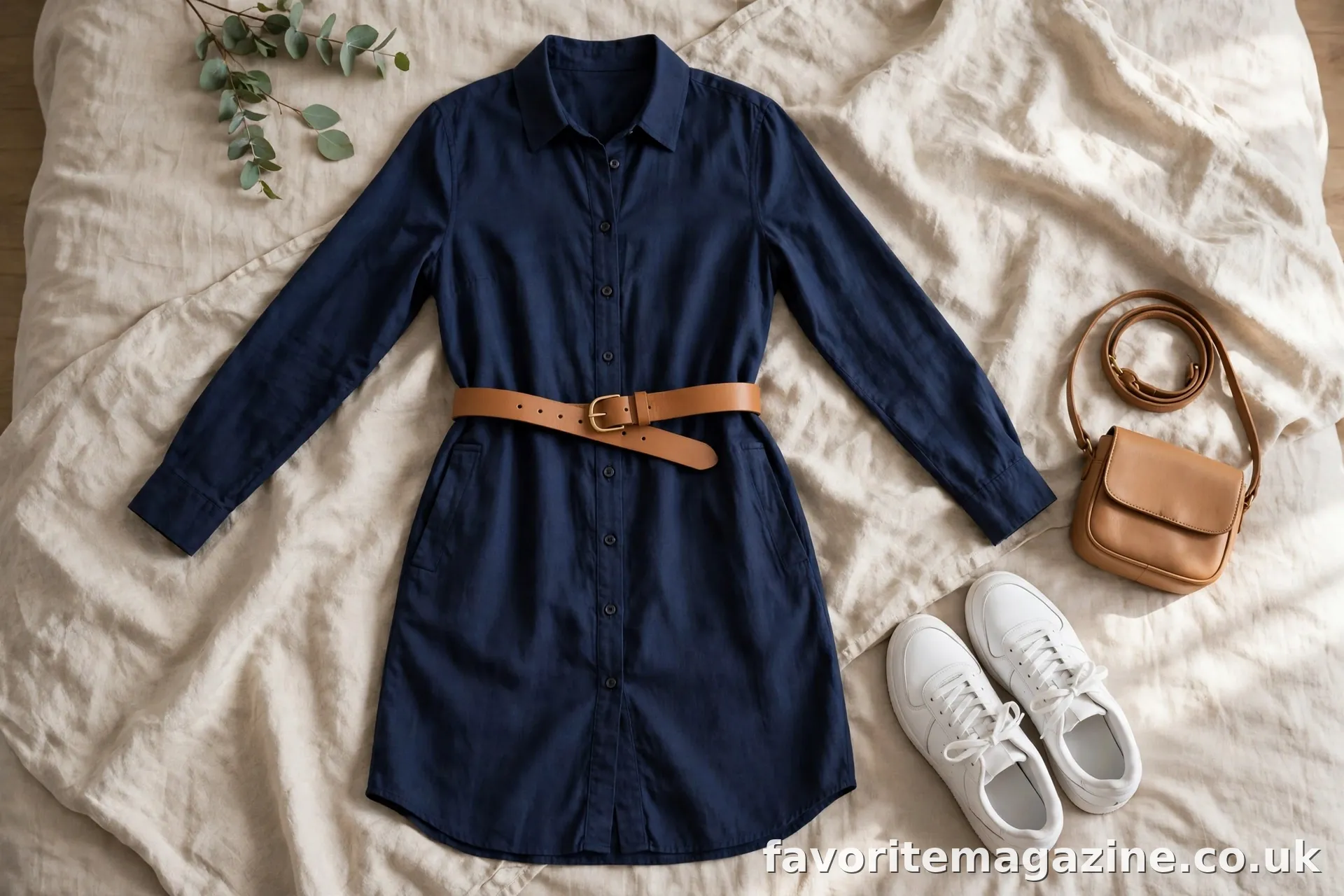
You do not need many accessories for a shirt dress, because the collar and buttons already give the outfit detail.
- Belts: a slim leather belt is the most useful accessory you can own for a shirt dress. It defines the waist and changes the whole shape. Keep one in black and one in tan.
- Scarves: a light scarf at the neck works well with a shirt dress, especially in a plain colour. Tie it loosely and let it sit over the collar.
- Bags: a structured tote suits the work look, a small crossbody suits the casual look, and a clutch suits the evening look.
- Jewellery: keep it simple. A shirt dress already has a collar, buttons, and often a pocket, so heavy necklaces compete with the dress. Small earrings and one bracelet are usually enough.
The Mistakes I See All the Time
These are the errors that turn a good shirt dress into a frustrating one.
- The wrong size across the bust. If the buttons gape, the dress is too small. Go up a size and belt the waist — a belted larger dress looks far better than a tight smaller one.
- A belt at the wrong place. A belt should sit at your natural waist, not at your hips. Too low and the outfit looks shapeless; too high and it looks uncomfortable.
- Too many layers. A shirt dress with a belt, a scarf, a statement necklace, and a patterned bag is too much. Pick one or two accessories and stop.
- The wrong shoes for the length. A midi shirt dress with flat sandals can shorten the legs. A short shirt dress with very high heels can look unbalanced. Match the shoe to the length.
- Ironing the collar flat. A shirt dress collar should stand up slightly, not lie flat against the chest. A quick press with an iron, holding the collar upright, makes the whole dress look sharper.
- Wearing it only one way. A shirt dress is one of the most flexible pieces you can own. If you only ever wear it belted with boots, try it open over jeans or loose with trainers — you may find a second outfit hiding in the same dress.
Frequently Asked Questions
Can you wear a shirt dress to work?
Yes, and it is one of the easiest work outfits. Pick a solid colour or a fine stripe, keep the length at the knee, and add a blazer. The collar gives it structure, so it reads as smart without any effort. Avoid very short lengths and loud prints for a formal office.
How do you belt a shirt dress?
Belt it at your natural waist — the narrowest part of your torso, usually just above the belly button. A slim leather belt works best. If the dress has its own tie, you can use that instead, but your own belt usually looks cleaner and lets you choose the colour.
What shoes go with a shirt dress?
Ankle boots and knee-high boots in cooler months, clean white trainers for a casual look, pointed flats or loafers for work, and heeled ankle boots or strappy heels for the evening. The right shoe depends on the length: shorter dresses suit boots and trainers, longer dresses suit a heel or a pointed shoe.
Can you wear a shirt dress in winter?
Yes. Layer it over tights with knee-high boots, add a long coat, and wear a thin jumper underneath if it is really cold — a fine-knit roll neck under a shirt dress looks smart and adds real warmth. A longer, heavier fabric like a brushed cotton works better in winter than a thin poplin.
How do you stop a shirt dress looking shapeless?
Belt it. A belt at the natural waist is the single easiest fix for a shapeless shirt dress. If you do not want a belt, choose a dress with a fitted waist or a tie, or wear it open over jeans as a layer instead of as a dress on its own.