

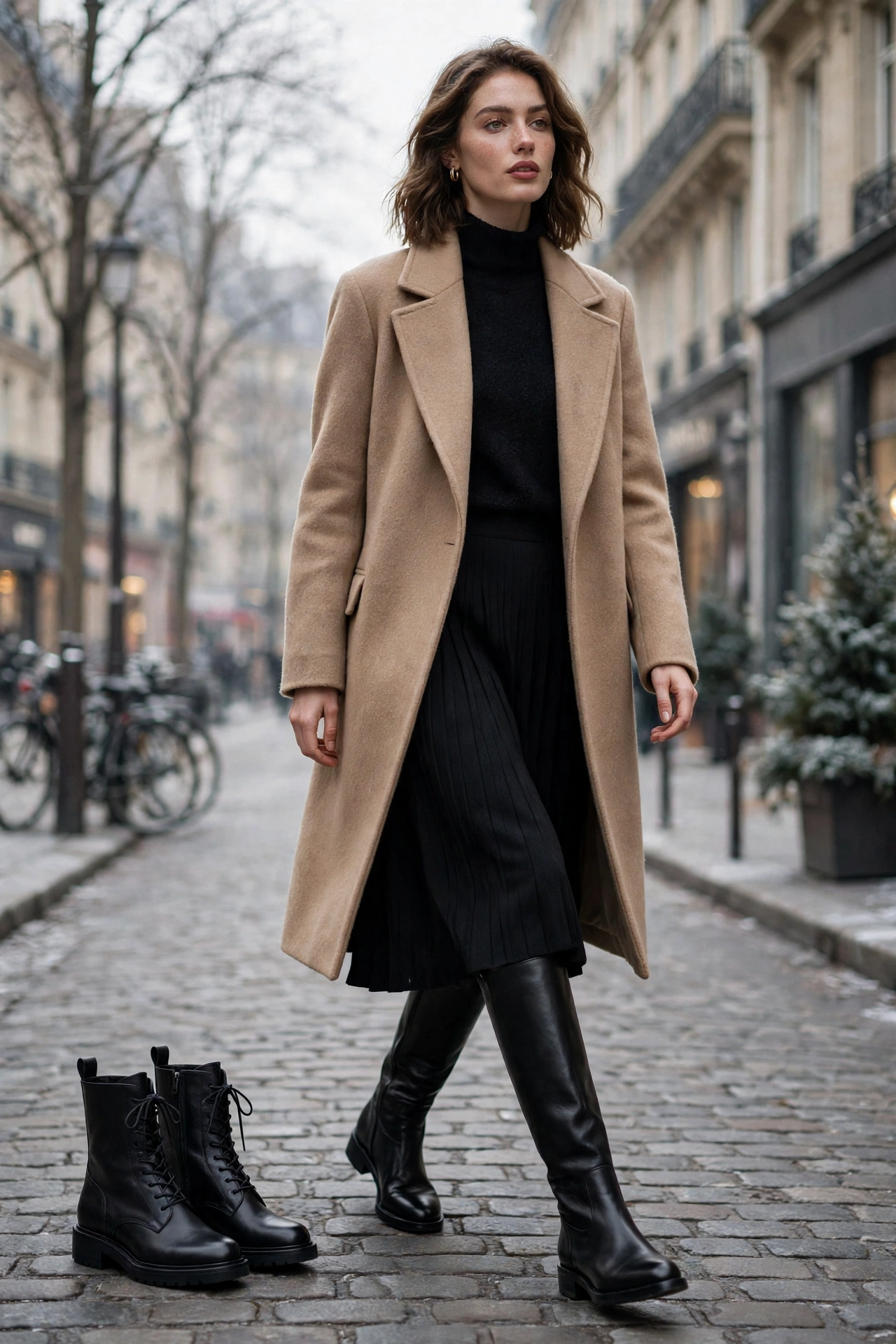
Winter boots have one hard job: keep your feet warm and dry on wet pavements, and still look good with the rest of your outfit. The best pairs this year do both, and the styles worth your money fall into a few clear types. This guide breaks down each type, who it suits, and what to check before you buy.
You do not need five pairs. Most women are well covered with two: one practical everyday pair and one smarter pair for evenings and work.
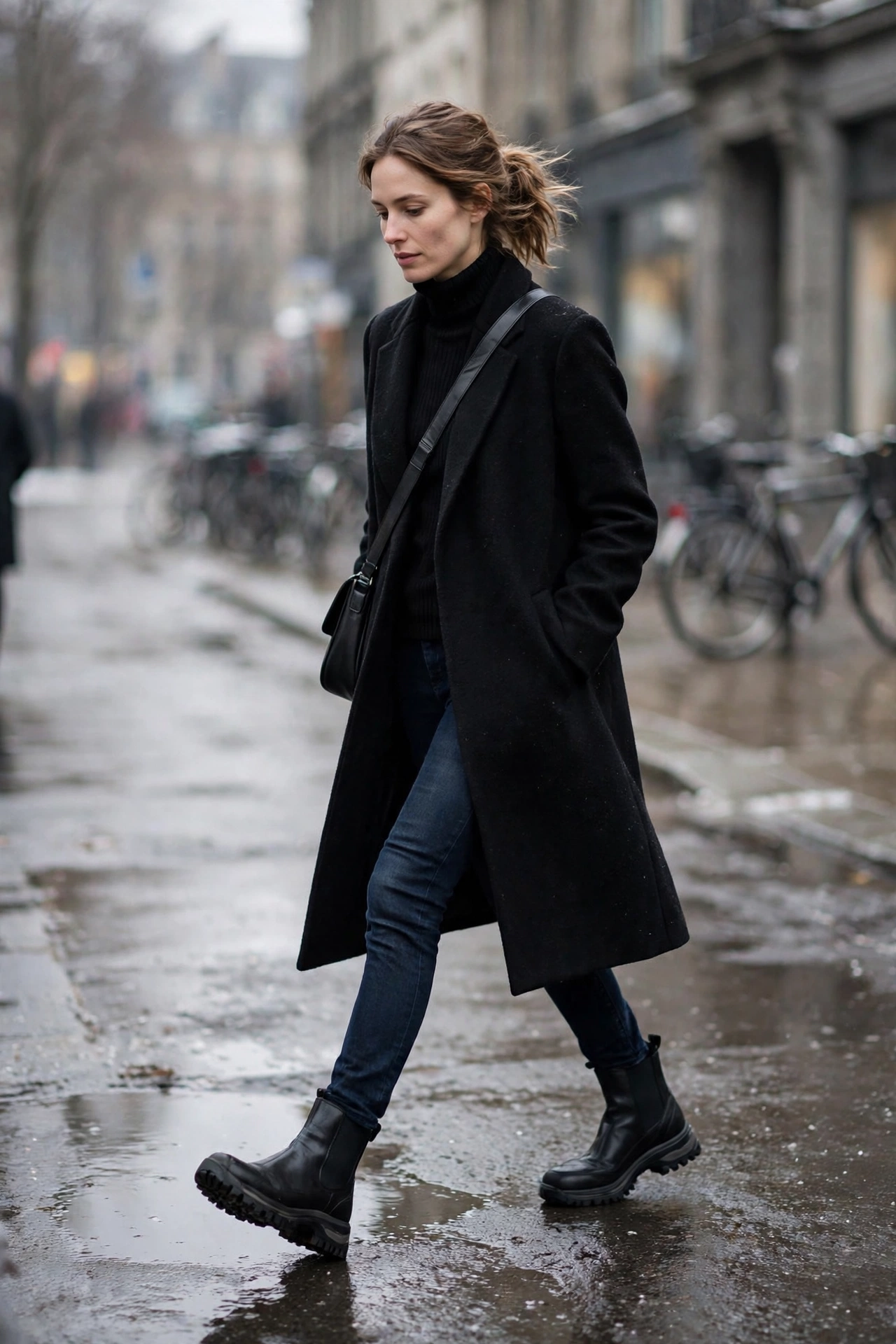
Ankle boots: the everyday winner
If you buy one pair of winter boots, make it ankle boots. They go with jeans, midi skirts, wide-leg trousers, and dresses with tights. They are easy to walk in all day, and they suit almost every outfit in a winter wardrobe.
What to look for:
- A block heel or flat sole. A sturdy block heel gives height without the wobble of a stiletto on wet ground. Flat ankle boots with a gripped sole are the most practical of all.
- A side zip. Lace-ups look great, but a side zip means you can get them on and off in seconds on busy mornings.
- Leather or good faux leather. Real leather moulds to your foot over time and handles rain better than suede. Save suede for dry days.
- A rounded or almond toe. Pointed toes look sharp but pinch when you add thick socks. In winter, comfort wins.
Black and dark brown are the most useful colours. Black goes with everything; dark brown softens an outfit and pairs beautifully with camel, cream, and olive coats.
Knee-high boots: the cold-weather classic
Knee-high boots earn their place when the weather turns properly cold. They cover more of your leg, which means you can wear skirts and dresses through winter without freezing, and they look polished with slim trousers tucked in.
Fit matters more here than with any other boot. The shaft should close around your calf without gaping or squeezing. If you have slim calves, look for pairs with an adjustable buckle or a stretch panel at the back. If your calves are fuller, check the calf width measurement before ordering — most brands list it, and it saves a return.
Flat knee-high boots are the practical choice for daily wear. A low block heel version works for the office and evenings. Very high heels on knee boots look striking but are hard work on icy pavements, so keep those for nights out, not commutes.
Chelsea boots: the easy slip-on
Chelsea boots are the pair you reach for when you want to look put together with no effort. The elastic side panels mean no zips, no laces, just step in and go.
They suit straight-leg and slim jeans, and they sit neatly under wide-leg trousers. For winter, look for a slightly chunkier sole than the classic slim Chelsea — a commando or lug sole grips wet ground and looks modern without being heavy.
One tip: try Chelsea boots on with the socks you will actually wear. A pair that fits with thin socks can feel tight with thick winter ones, and elastic panels only stretch so far.
Snow and weatherproof boots: for the worst days
Some winter days are simply not leather-boot days. Heavy rain, slush, and snow call for a proper weatherproof pair: sealed seams, a gripped rubber sole, and a warm lining.
Modern weatherproof boots no longer look like wellies. You can find sleek, low-profile pairs in black leather-look finishes that pass easily in a city. Keep a pair by the door for bad-weather days, and your good leather boots will last years longer because they are not doing the worst work.
When you buy weatherproof boots, check the sole first. Deep tread is what keeps you upright on wet leaves and ice. A smooth fashion sole on a “winter” boot is a warning sign.
Heeled boots for evenings
Winter evenings still call for something dressier. A heeled ankle boot in suede or leather, with a block heel of around two inches, is the safest smart choice. It pairs with midi dresses, wide-leg trousers, and a long coat, and it is walkable enough for a night out.
If you love a higher heel, keep the boot shaft fitted and the heel block-shaped. And carry a pair of flat shoes in your bag for the walk home — nobody enjoys a long walk in heels on cold pavements.
What makes a winter boot actually warm
Warmth comes from three things, and none of them is the outside material alone:
- Lining. Fleece, faux fur, or shearling linings add real warmth. A thin fabric lining does very little on a cold day.
- Sole thickness. A thicker sole insulates your feet from cold ground. Thin fashion soles let the cold straight through.
- Room for socks. Boots that are slightly roomy let you wear proper winter socks, and the air trapped around your foot is what insulates. Boots that are skin-tight leave no room for warmth.
If your feet are always cold, check the socks before blaming the boots. A pair of wool-blend socks changes the warmth of almost any boot.
How to choose the right pair for you
Ask yourself three questions before buying:
- Where will I walk? City pavements need grip and water resistance. Office days need comfort for hours indoors. Countryside needs a tougher sole.
- What will I wear them with? If your winter wardrobe is mostly jeans, ankle or Chelsea boots are the answer. If you wear skirts and dresses, knee-high boots earn their money.
- How much walking do I do? Over an hour a day on foot means comfort and grip matter more than heel height. Under that, you have more freedom to choose style.
Taking care of winter boots
Winter is hard on boots, and a little care goes a long way:
- Waterproof leather boots before the first wear, and again mid-season. It takes five minutes and stops rain stains.
- Wipe off salt and slush when you get home. Left to dry, road salt marks leather permanently.
- Use boot trees or stuff the shafts with rolled newspaper so knee-high boots keep their shape.
- Let wet boots dry naturally, away from radiators. Direct heat cracks leather and warps soles.
- Rotate pairs if you can. Boots last much longer when they get a day off to dry out fully between wears.
Frequently asked questions
Which winter boots are best for walking all day?
Flat or low block-heel ankle boots with a gripped rubber sole and a fleece or warm lining. Make sure there is room for wool-blend socks, and break them in with short walks before a long day.
Are knee-high boots still in style for 2026?
Yes. Flat and low-heeled knee-high boots remain a winter staple, especially with midi skirts and slim trousers. The current look is clean and simple — minimal buckles, dark leather, no heavy hardware.
Can I wear suede boots in winter?
You can, but keep them for dry days. Suede marks easily in rain and slush. If you love suede, spray them with a suede protector before wearing, and keep a leather pair for wet weather.
How do I stop winter boots from smelling?
Let them dry fully between wears, rotate pairs when possible, and wear moisture-wicking socks. A sprinkle of baking soda left overnight and shaken out also helps freshen the lining.
Should winter boots be a size bigger than normal shoes?
Not a full size — but half a size of extra room helps if you wear thick socks. Try boots on with your winter socks, and walk around the shop for a few minutes before deciding.
Related reading on Favorite Magazine: Winter Coat Styles, How to Style a Wool Scarf, Capsule Wardrobe Essentials.