


Learning how to style a wool scarf is less about fancy knots and more about proportion: the scarf should warm up the outfit without swallowing it. The easiest approach is to pick one simple drape, let the scarf sit naturally, and stop fussing with it. A wool scarf looks best when it looks like you just threw it on — even if you spent a minute getting it right.
I wear wool scarves for months every year, and I have learned that most people overcomplicate them. You do not need ten knots. You need two or three ways that suit your coat, and the confidence to leave the scarf alone after that.
The Classic Drape (Easiest, Always Works)
Fold the scarf in half lengthwise, drape it around your neck, and let both ends hang loose at the front. That is it. This works with almost every coat, from a long wool coat to a shorter jacket, because it adds warmth at the neck without bulk.
It looks best when the scarf is a little longer than your coat’s lapels, so the ends peek out below the coat line rather than disappearing inside it. If your scarf is very chunky, keep the rest of the outfit simple — a plain coat, a simple top — and let the scarf be the texture in the outfit.
The Loop (Warmest for Proper Cold Days)
Wrap the scarf around your neck twice, then tuck the ends in. This is the one for genuinely cold mornings, when the wind finds every gap. A loop works best with a longer, softer scarf; a short, stiff one will fight you and end up looking lumpy.
The trick is to keep the loop loose. Pull it tight and it looks like a neck brace. Leave a little air in it and it looks relaxed, the way a scarf should. I usually do the loop with my winter coat on the coldest days, and switch to the drape when the weather softens.
Over One Shoulder (Best With a Blazer)
Drape the scarf around your neck and throw one end over the opposite shoulder. This is the most polished way to wear wool, and it suits a blazer or a tailored coat better than a puffer. It adds a long line down the front of the outfit, which is flattering and simple.
Keep the hanging end long — at least to your waist — or the whole thing looks accidental. This is also the best option if your scarf has a pattern you want to show off, because one full end stays visible instead of being wrapped away.
Belted Over a Coat (For a Dressier Look)
For a smarter outfit, drape the scarf evenly at the front and belt your coat over it. The belt holds the scarf in place and turns it into part of the outfit rather than an afterthought. This works beautifully with a long coat and a dress or tailored trousers underneath.
It only works if the scarf is not too thick — a heavy chunky knit under a belt will bunch. Use a finer wool scarf for this one, in a colour that works with the coat rather than fighting it.
The Tuck (Neat, Under a Collar)
Tuck the scarf inside your coat, with just a fold of wool showing above the collar. This is the neatest option, and it suits work outfits and smarter coats. It also stops the scarf from catching on bag straps, which is a small thing until it happens to your favourite scarf.
Choosing the Right Scarf
| Scarf type | Best way to wear it | Suits best with |
|---|---|---|
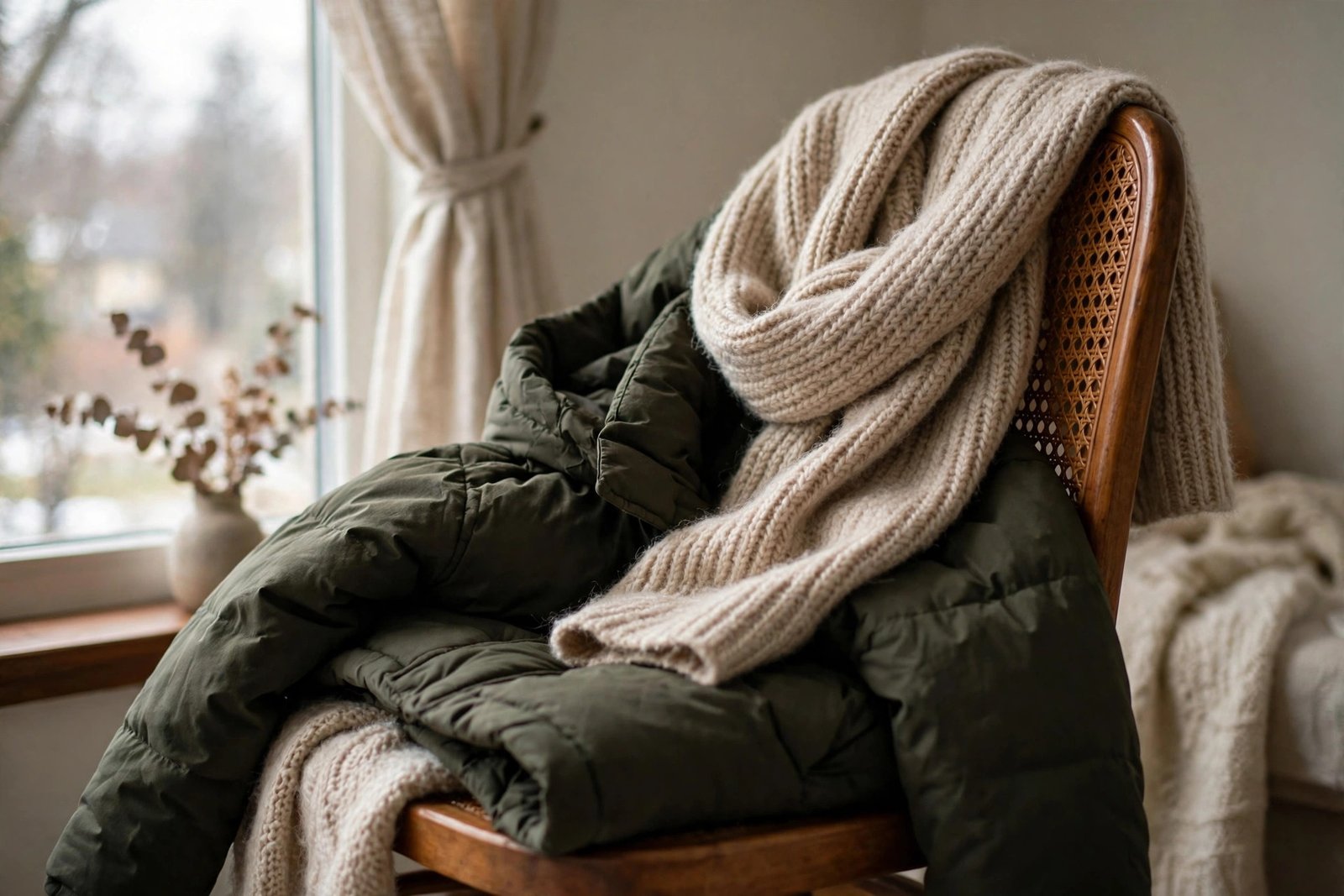
| Long, soft wool | Loop or drape | Long coats, puffer jackets |
| Fine, lightweight wool | Belted or tucked | Blazers, tailored coats |
| Chunky knit | Classic drape | Casual coats, everyday outfits |
| Patterned wool | Over one shoulder | Plain coats, simple outfits |
Colour-wise, one rule has served me well: if your coat is patterned or bright, pick a plain scarf. If your coat is plain, the scarf is where the colour or pattern belongs. That balance is what makes an outfit look considered rather than thrown together — even when it was, in fact, thrown together in a hurry.
Mistakes That Spoil a Good Scarf
- Matching everything exactly. A scarf in the exact same shade as your coat looks like a uniform. Pick a tone that works with the coat, not one that copies it.
- Too much bulk at the neck. If your chin disappears, the scarf is wearing you. Loosen it or switch to a finer wool.
- Fussy knots. Complicated knots look clever in a tutorial and fussy in real life. Simple drapes photograph better and feel better.
- Ignoring the rest of the outfit. A beautiful scarf cannot save an outfit that does not fit well. Sort the coat first, then the scarf.
Scarf Care: Keeping Wool Good
A good wool scarf lasts years if you treat it kindly. Hand wash it in cool water with a gentle detergent, or use the wool cycle if the label allows it, and dry it flat — never hang a wet wool scarf, because the weight stretches it out of shape. Fold it for storage rather than hanging it, and keep it away from direct sunlight in summer, which fades colour over time.
If it starts pilling, a simple fabric comb or even a disposable razor, used very gently, takes the pills off without damaging the knit. I do mine once a season, and the scarf looks nearly new again. Wool rewards a little care in a way that cheaper fabrics never do.
FAQ
What is the easiest way to style a wool scarf? The classic drape: fold it in half, put it around your neck, and let both ends hang loose. It works with almost every coat and takes five seconds.
How do I wear a wool scarf without looking bulky? Choose a finer wool, keep the wrap loose, and let the rest of the outfit stay simple. Bulk usually comes from wrapping too tightly or pairing a chunky scarf with an already bulky coat.
Can I wear a wool scarf with a blazer? Yes — the over-one-shoulder drape or a neat tuck both work well with a blazer. Use a finer wool scarf rather than a heavy knit, so the blazer’s shape stays clean.
What colour scarf goes with everything? A soft grey, camel, or navy covers most winter coats. If you buy one scarf, pick a neutral in a wool you love touching, because you will wear it constantly.
A wool scarf is one of the few winter pieces that is both practical and genuinely stylish, and it does not need much technique — just a simple drape, the right weight for your coat, and the confidence to leave it alone. Which way do you reach for most often, and does your scarf match your coat or contrast with it? Have a look at our capsule wardrobe essentials for more pieces that earn their place every winter, and browse the rest of Fashion for seasonal ideas.
About the author: Junaid Ashraf writes for Favorite Magazine, covering fashion and seasonal style with a focus on outfits that work in real life, not just in photos.