
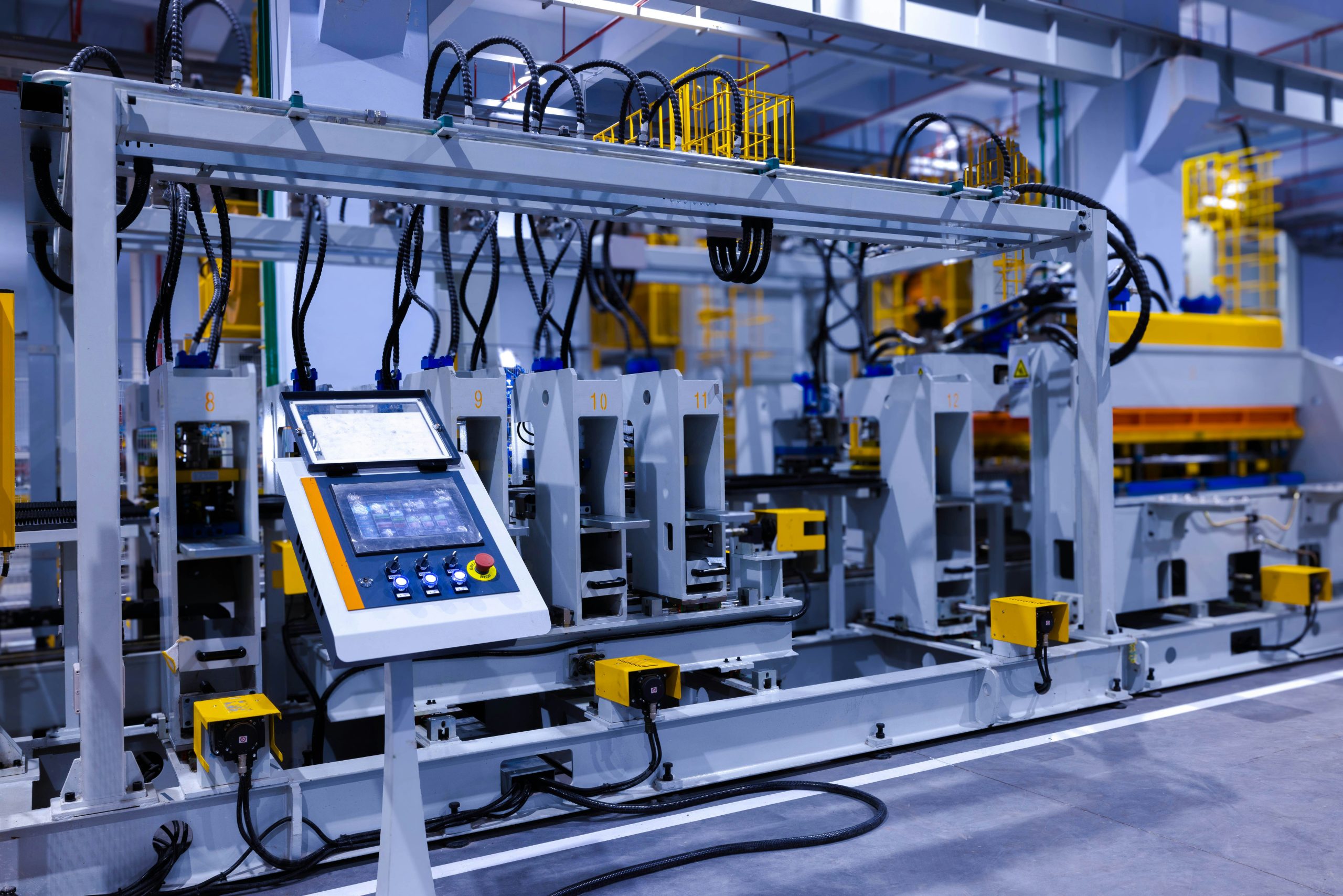
Manufacturing has never stood still. From the steam-powered looms of the Industrial Revolution to the robotic assembly lines of the late 20th century, each era brought tools that redefined what was possible on the factory floor. Computer-controlled (CNC) tools represent the latest—and arguably most significant—leap forward in this ongoing evolution.
The Mechanics of Precision: Reducing Error and Waste
Human operators are skilled, but they’re also variable. Fatigue sets in. Measurements drift. Small inconsistencies compound over thousands of production cycles. CNC machines don’t have these problems.
By executing the same programmed sequence repeatedly—with tolerances often measured in microns—CNC tools eliminate the variability that leads to defective parts and material waste. A single flawed cut on a metal component doesn’t just waste that piece of material; it triggers rework, slows output, and erodes profit margins.
Precision also has downstream benefits. When components are machined to exact specifications consistently, assembly processes become smoother, quality control becomes less burdensome, and product returns drop. For a forging company producing high-volume metal components, even a marginal improvement in dimensional accuracy can translate into significant annual savings.
The reduction in scrap material alone often justifies the operational shift. Industries working with expensive raw materials—aerospace-grade aluminum, titanium, or tool steel—stand to gain the most, as tighter precision directly reduces the volume of material lost during machining.
Speed and Scalability: Software-Driven Workflows
Precision matters, but so does pace. CNC systems don’t just cut more accurately—they cut faster, and they do it around the clock.
Traditional manual machining requires operators to set up, measure, adjust, and re-check at each stage of production. CNC workflows compress this cycle dramatically. Once a program is validated, the machine can run continuously with minimal human intervention. Setup times shrink. Changeovers between product variants become a matter of loading a new program rather than reconfiguring physical tooling from scratch.
This scalability is particularly valuable when production demands fluctuate. A manufacturer responding to a surge in orders doesn’t need to hire additional skilled machinists overnight—they can extend machine run hours, add shifts, or replicate the workflow across multiple CNC units. The software-defined nature of the process means consistency scales with volume, not against it.
Modern CAD/CAM integration takes this further. Engineers can design components digitally, simulate the machining process, identify potential issues before a single cut is made, and push the final program directly to the machine. The gap between design and production shrinks from days to hours.
Cost-Benefit Analysis: Investment vs. Long-Term Savings
CNC equipment carries a real upfront cost. A capable machining center can run anywhere from tens of thousands to several hundred thousand dollars, depending on its capabilities. For smaller manufacturers, this price point can feel prohibitive.
But the financial picture changes substantially when you account for the full operational lifecycle.
Labor costs are the most obvious factor. CNC machines can operate with fewer direct operators per unit of output. One skilled technician can often supervise multiple machines simultaneously, compared to the one-to-one ratio of manual machining. Over a multi-year period, the labor savings alone frequently offset the initial capital expenditure.
Add to that the reduction in scrap, rework, and quality failures. Manufacturers consistently report lower defect rates after transitioning to CNC processes, which means less material wasted, fewer customer complaints, and lower warranty costs.
Maintenance expenses, while real, are also more predictable with CNC systems. Scheduled servicing, combined with the diagnostics built into modern controllers, means fewer unexpected breakdowns. Downtime—the silent killer of production efficiency—decreases accordingly.
The break-even point varies by industry and production volume, but for manufacturers running medium-to-high output operations, the return on CNC investment tends to materialize within two to four years.
Smart Manufacturing and the Future of CNC
CNC technology is not a static achievement. The machines running today are already meaningfully more capable than those from a decade ago, and the trajectory points toward even greater integration with artificial intelligence and connected manufacturing systems.
Predictive maintenance is one of the most compelling developments on the horizon. Traditional maintenance follows either a fixed schedule or a reactive model—you service the machine at set intervals, or you fix it when it breaks. Neither approach is optimal. Scheduled maintenance sometimes replaces components that still have useful life; reactive maintenance results in unplanned downtime that can halt an entire production line.
AI-driven predictive maintenance changes this calculus. Sensors embedded in CNC equipment continuously monitor variables like vibration patterns, spindle load, temperature, and cutting resistance. Machine learning models analyze this data in real time, identifying subtle deviations that signal an impending component failure—often days or weeks before it would otherwise be detected. Maintenance teams can then schedule interventions at the least disruptive moment, replacing only what needs replacing.
Beyond maintenance, AI is beginning to influence the machining process itself. Adaptive control systems can adjust cutting parameters in real time based on feedback from the workpiece, compensating for material variation or tool wear without interrupting production. The machine, in a sense, learns to optimize itself.
Digital Control Is Now a Competitive Baseline
The manufacturers who thrive in the coming decade won’t necessarily be the largest—they’ll be the most efficient. CNC technology, and the smarter systems being layered on top of it, gives producers of all sizes the tools to compete on precision, speed, and cost simultaneously.
The question is no longer whether to adopt computer-controlled manufacturing. It’s how quickly an operation can integrate these systems thoughtfully—training its workforce, optimizing its workflows, and positioning itself to take advantage of the AI-driven capabilities that are fast becoming standard rather than exceptional.
For industrial producers, digital control isn’t just an operational upgrade. It’s the cornerstone of staying relevant.
Conclusion
Now that we have discussed the impact of computer-controlled manufacturing on industrial production, it is clear that this technology is no longer just a luxury, but a necessity. It offers numerous benefits such as increased productivity, improved quality and efficiency, and reduced costs.