
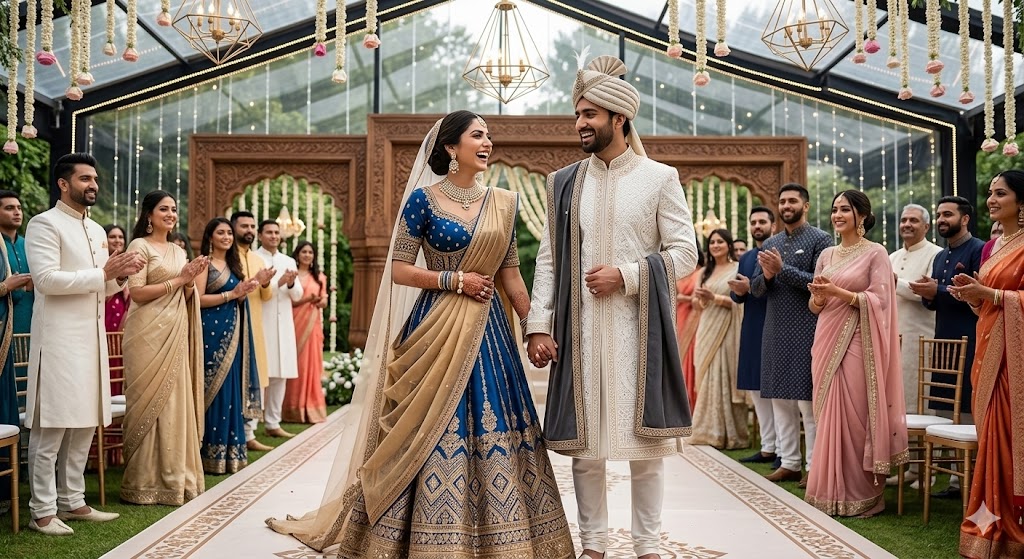
The world of bridal fashion is undergoing a magnificent transformation. As we look toward the horizon of the coming year, traditional wedding outfit ideas 2026 are blending deep-rooted heritage with a refreshing, modern consciousness. Today’s brides and grooms are no longer just looking for a “costume” for their big day; they are seeking heirlooms that tell a story of where they come from and who they intend to become.
Whether you are dreaming of a regal lehenga, a sleek sari-gown, or a sustainable A-line silhouette, the trends for 2026 prioritize three things: individuality, comfort, and ethical craftsmanship. In this comprehensive guide, we will explore the textures, colors, and silhouettes defining the next era of matrimonial style.
1. The Revival of the “Regal Silhouette”
For 2026, many designers are looking backward to move forward. The return of Victorian-inspired structures and royal court aesthetics is creating a “New Regency” vibe in bridal fashion.
The Basque Waist & Drop Waist
One of the most significant shifts in traditional wedding outfit ideas 2026 is the departure from standard natural waistlines.
-
The Basque Waist: This silhouette features a bodice that dips into a flattering “V” or “U” shape below the waist, creating an elongated, statuesque look.
-
Drop Waistlines: Resting lower on the hips, these provide a modern, high-fashion edge to traditional ballgowns and heavy skirts.
Sculptural Minimalism
While “maximalism” often defines traditional weddings, 2026 is ushering in sculpted minimalism. Think heavy Silk Mikado or Brocade fabrics that hold their shape without the need for excessive beading. This trend focuses on the “architecture” of the garment—sharp lines, square necklines, and dramatic, clean folds.
2. Global Fusion: Where East Meets West
Cultural boundaries are blurring beautifully in 2026. Multicultural couples are increasingly opting for “Fusion Sets” that celebrate multiple heritages in a single look.
The Rise of Saree-Gowns and Pre-Draped Drapes
Traditional draping can be intimidating, but 2026 is making it effortless. Pre-draped sarees and saree-gowns are trending for brides who want the grace of a saree with the structure of a Western evening gown. These often feature:
-
Corset-style blouses for a structured fit.
-
Detachable capes instead of a traditional dupatta.
-
High slits for a touch of contemporary daring.
Zardozi on Western Silhouettes
We are seeing a massive surge in Western-style white gowns embellished with traditional Eastern techniques like Zardozi, Gota Patti, and Mirror work. This “Cultural Fusion” allows brides to maintain a classic bridal aesthetic while honoring their artisan roots.
3. Color Palettes: Beyond the Traditional Red and White
While classic red and ivory will never go out of style, the traditional wedding outfit ideas 2026 palette is expanding into “Earth-Tone Elegance” and “Vibrant Jewel Tones.”
| Season | Trending Primary Colors | Metallic Accents |
| Spring | Sage Green, Lilac, Butter Yellow | Silver, Champagne |
| Summer | Cobalt Blue, Electric Fuchsia, Coral | Rose Gold |
| Fall | Burnt Orange, Rust, Emerald | Copper, Antique Gold |
| Winter | Burgundy, Navy, Plum | High-Shine Gold |
The “Red 2.0” Movement
For cultures where red is sacred (like South Asian and Chinese weddings), 2026 introduces Red 2.0. This isn’t just one shade; it’s a monochromatic play on textures. Imagine a velvet lehenga paired with a sheer organza dupatta, all in varying tones of deep crimson and oxblood.
4. Sustainable & Ethical “Conscious Couture”
Sustainability is the most “fashion-forward” choice a bride can make in 2026. Eco-conscious fashion has moved from a niche market to the main stage of bridal weeks.
Heirloom Fabrics
Brides are gravitating toward handwoven Banarasi silk, Ahimsa (Peace) silk, and organic cotton. These fabrics aren’t just eco-friendly; they support local artisans and ensure the garment lasts long enough to be passed down to the next generation.
Modular & Multi-Wear Outfits
The “one-day dress” is a thing of the past. Traditional wedding outfit ideas 2026 emphasize versatility:
-
Detachable Sleeves: Transition from a modest ceremony look to a party-ready reception outfit.
-
Convertible Skirts: Removable overskirts that reveal a sleek column dress underneath.
-
Bridal Separates: Mixing and matching a heavy embroidered blouse with a lighter skirt for post-wedding events.
5. Accessories That Steal the Spotlight
In 2026, the outfit is only half the story. The accessories are designed to be “statement makers.”
-
Chunky Hathphool: Oversized hand jewelry featuring Polki diamonds or oversized pearls is replacing delicate chains.
-
Cathedral Veils with a Message: Long, dramatic veils are being personalized with embroidered mantras, wedding dates, or even “love letters” stitched into the hem.
-
Coconut & Shell Kaleere: For beach and destination weddings, natural elements like shells and dried flowers are being integrated into traditional bridal ornaments.
6. Comfort-First Craftsmanship: “The Lightweight Revolution”
One of the biggest complaints of traditional brides is the weight of their attire. In 2026, technology meets tradition to solve this.
Weight Reduction Without Losing Grandeur
Designers are using innovative padding and lighter can-cans to give skirts volume without the heavy lifting. By using Georgette, Chiffon, and Laser-cut lace, brides can now move, dance, and breathe throughout 12-hour ceremonies without fatigue.
Conclusion: Crafting Your 2026 Legacy
As you explore traditional wedding outfit ideas 2026, remember that the most beautiful thing you can wear is your own story. Whether you choose a minimalist silk gown or a heavily embellished heritage lehenga, the goal is to feel like the most authentic version of yourself. 2026 is the year of the “fearless bride”—one who respects the past but isn’t afraid to tailor it to her modern life.
Ready to start your bridal journey? I can help you narrow down your search based on your specific cultural background or wedding venue!
Frequently Asked Questions (FAQs)
1. What is the most popular bridal color for 2026?
While Ivory and Champagne remain the top choices for Western-style weddings, Cobalt Blue and Emerald Green are the breakout stars for 2026. For those sticking to tradition, “Red 2.0″—a mix of different red textures like velvet and silk—is the modern way to wear the classic crimson.
2. Are heavy lehengas still in style for 2026?
The look of a heavy lehenga is still very much in style, but the weight is changing. 2026 trends focus on lightweight lehengas that use “intelligent craftsmanship,” such as 3D floral appliqués and digital prints combined with light hand-embroidery, to provide a regal look without the physical strain.
3. How can I make my traditional wedding outfit more sustainable?
Look for designers who use organic silks, recycled zari (metallic thread), and natural dyes. Additionally, consider modular designs (like a 3-piece set) that allow you to re-wear the blouse or skirt separately for other functions after the wedding.
4. What are “Basque waists,” and why are they trending?
A Basque waist is a bodice that extends past the natural waistline and ends in a pointed “V” shape. It is trending because it provides a very flattering, “snatched” waistline and a regal, historical aesthetic that feels fresh compared to the standard “A-line” cuts of previous years.
5. Can I wear a jumpsuit for a traditional wedding?
Absolutely! Bridal jumpsuits and pantsuits with traditional embroidery or a long, attached “pallu” or cape are a major trend for 2026, especially for pre-wedding functions like the Mehndi, Sangeet, or civil ceremonies.