
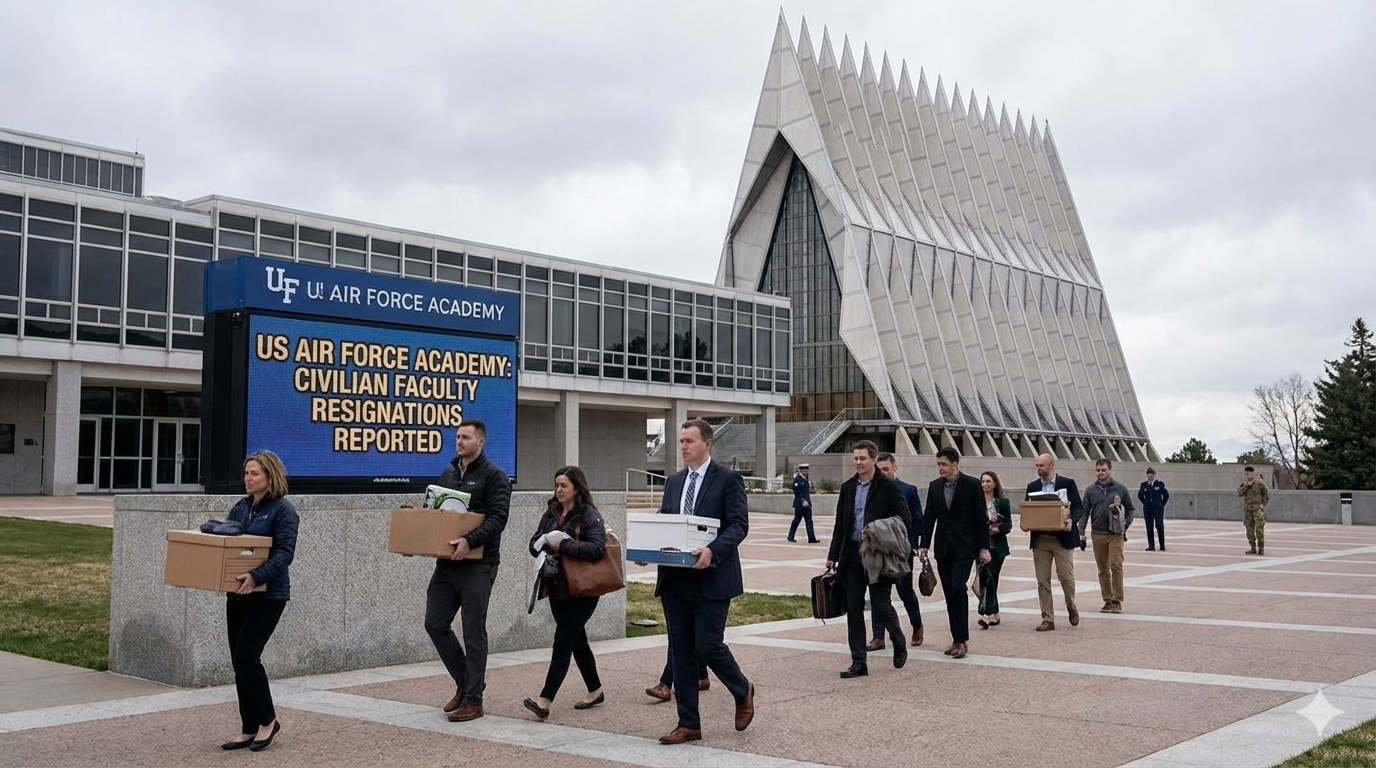
1. Department of Defense Civilian Workforce Reductions
The Academy is adjusting to a wider Department of Defense-wide civilian workforce reduction plan. As part of this effort, several civilian positions at USAFA have been targeted for elimination or restructuring. These changes are largely driven by the DoD’s fiscal 2025 and 2026 budget priorities and initiatives to reshape staffing.
To help facilitate this reduction, USAFA offered programs like the Deferred Resignation Program (DRP) and Voluntary Early Retirement Authority (VERA). Many civilian faculty accepted these incentives, resulting in significant faculty departures.
How Many Civilian Faculty Are Leaving?
Different sources indicate different numbers, but the trend is clear:
-
Over 50 civilian instructors have already resigned through the DRP, and many of their positions were eliminated rather than refilled.
-
Academy leadership acknowledged around 25 faculty departures this year due to DRP, retirements, or end of term positions, with 19 military faculty brought in as replacements.
-
Critics and some insiders claim the actual number of civilian resignations or losses could be higher (possibly 75–100+), although exact figures vary. Why Are Civilian Faculty Leaving?
Several factors contribute to these resignations:
Voluntary Incentives and Retirement Programs
-
USAFA offered financial incentives and early retirement options, making resignation more attractive for some civilian employees.
Uncertainty and Job Security Concerns
-
Reports indicate that ongoing staffing changes and uncertainties about long-term roles have pushed some faculty to leave voluntarily or seek opportunities elsewhere.
Civilian Positions Being Eliminated
-
Many positions held by resigning civilians were intentionally set to be cut, rather than planned to be filled again, meaning departing faculty positions simply vanish.
Impact on USAFA’s Academic Mission
Curriculum and Teaching Coverage
USAFA leadership has said that they are adding military personnel with appropriate academic credentials to cover the curriculum. However, some observers argue that:
-
Replacing civilian PhD faculty with military personnel doesn’t fully fill the gap, especially in disciplines like STEM where advanced specialization is critical.
Concerns About Academic Rigor and Accreditation
There is a pending review by the Higher Learning Commission (HLC) prompted by concerns that the loss of highly experienced and qualified civilian educators—especially those with doctoral degrees—could jeopardize USAFA’s compliance with accreditation standards.
Accreditation is vital: losing it could impact cadets’ ability to transfer credits or pursue advanced degrees.
Official Responses from USAFA Leadership
USAFA officials emphasize:
-
The workforce changes are part of prudent planning to align the Academy with broader DoD goals.
-
Remaining civilians and military faculty are committed to delivering high-quality education.
-
Efforts are underway to reassign displaced civilian employees into other roles where possible.
Criticism and Concerns from Faculty and Stakeholders
Some former and current faculty members have publicly raised concerns, including:
-
The loss of experienced educators could erode academic excellence and technical depth.
-
Replacing civilians with active-duty personnel may increase workload and stress among remaining faculty.
-
Morale among faculty has taken a hit amid these staffing transitions.
What This Means for Cadets and Education at USAFA
Despite the challenges, USAFA states that:
-
All existing majors and core academic programs remain intact for the current academic year.
-
Efforts are ongoing to maintain academic standards and quality instruction.
However, there are lingering questions about sustainability and long-term staffing balance, especially if civilian faculty reductions continue without clear plans for replacement or support.
Summary
Civilian faculty resignations at the U.S. Air Force Academy reflect a larger effort to reshape the civilian workforce within the Department of Defense. While some resignations were voluntary and incentivized, the broader cuts have sparked debate about their educational impact. USAFA leadership says school mission and quality remain strong, but critics worry about the effects on academic excellence and accreditation compliance.