
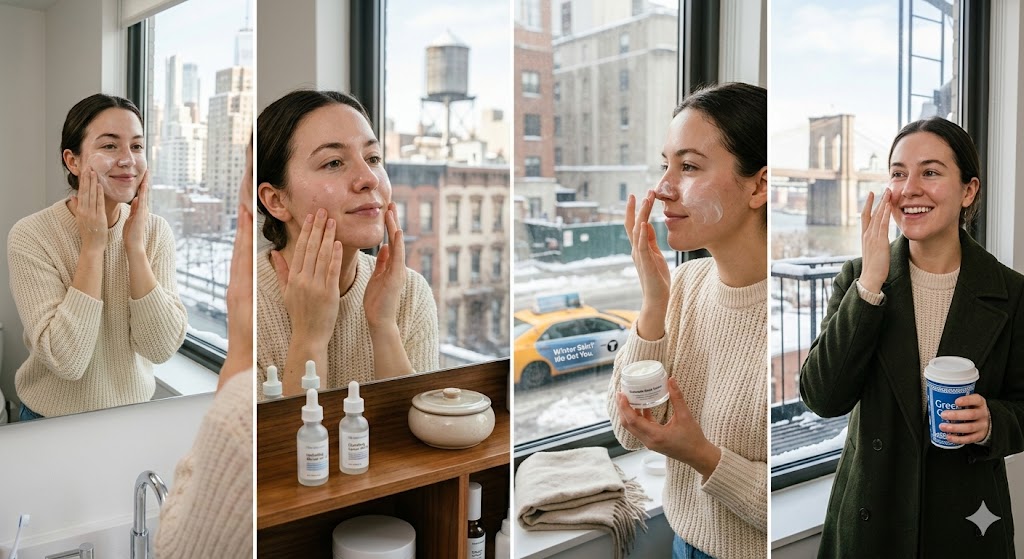
Living in the Big Apple during the colder months is a true test of endurance—not just for you, but for your skin. Between the biting winds whipping off the Hudson and the bone-dry steam heat pumping through pre-war apartment radiators, your complexion faces a constant uphill battle. Finding the best skincare routine for New York winter isn’t just about switching to a thicker cream; it’s about a strategic overhaul that addresses the unique environmental stressors of Manhattan, Brooklyn, and beyond.
In this comprehensive guide, we will dive deep into the science of the skin barrier, the essential ingredients you need to look for, and a step-by-step regimen designed to keep you glowing from the High Line to the Rockaways.
Why NYC Winters Are So Brutal on Your Skin
To master the best skincare routine for New York winter, you first have to understand what you’re up against. New York’s climate in January and February is characterized by a “double whammy” of low humidity. Outside, the frigid air holds very little water vapor. Inside, the heating systems—especially the legendary NYC steam radiators—strip what little moisture remains in the air.
This leads to a phenomenon known as Transepidermal Water Loss (TEWL). Essentially, the dry air acts like a sponge, sucking the hydration right out of your face. When your skin loses too much water, the lipid barrier (the “mortar” between your skin cells) cracks. This is why you might experience “winter itch,” flakiness, or a stinging sensation when applying products that usually feel fine in July.
The Impact of “Radiator Face” and Windburn
In New York, we spend a lot of time transitioning between extremes. You might walk ten blocks in 20°F wind, then step into a subway car or an office heated to a sweltering 78°F. These rapid temperature fluctuations cause blood vessels to dilate and constrict quickly, which can exacerbate rosacea and general redness.
Core Ingredients for the Best Skincare Routine for New York Winter
When scanning labels at your local pharmacy or Sephora, you want to look for a specific “holy trinity” of ingredients that provide hydration, support the barrier, and lock everything in.
1. Humectants: The Moisture Magnets
Humectants are ingredients that pull water into the upper layers of the skin.
-
Hyaluronic Acid: A superstar that can hold up to 1,000 times its weight in water.
-
Glycerin: Often overlooked but incredibly effective at attracting moisture in low-humidity environments.
-
Panthenol (Pro-Vitamin B5): Excellent for soothing the “rawness” associated with NYC windburn.
2. Ceramides: The Barrier Builders
If your skin is a brick wall, ceramides are the mortar. They are fatty acids that naturally occur in the skin but deplete during the winter. A ceramide-rich moisturizer is non-negotiable for the best skincare routine for New York winter.
3. Occlusives: The Protective Shield
In a city as windy as New York, you need a physical “seal” to prevent moisture from evaporating.
-
Squalane: A lightweight, non-comedogenic oil that mimics your skin’s natural sebum.
-
Shea Butter: Provides a rich, nourishing layer for very dry skin types.
-
Petrolatum: For those truly “polar vortex” days, a thin layer of an ointment can save your skin from cracking.
Step-by-Step: The Best Skincare Routine for New York Winter
Morning Routine: Defense and Protection
Step 1: The Gentle Cleanse
Skip the foaming, “squeaky clean” washes. In the winter, you want a non-stripping, cream-based cleanser. If your skin feels very dry, you can even skip the morning wash and just use lukewarm water to preserve your natural oils.
Step 2: The Damp-Skin Hack
Never apply your serums to bone-dry skin. After rinsing, leave your face slightly damp. Apply a Hyaluronic Acid serum immediately. This gives the humectant water to “grab” onto and pull into your pores.
Step 3: Vitamin C and Niacinamide
NYC air isn’t just cold; it’s also full of urban pollutants. Use a Vitamin C serum to fight free radicals and Niacinamide to strengthen the barrier and calm the redness caused by the wind.
Step 4: The Rich Moisturizer
Swap your summer lotion for a heavy-duty cream. Look for “barrier repair” on the label. This is the cornerstone of the best skincare routine for New York winter.
Step 5: SPF is Still Mandatory
Do not let the grey Manhattan skies fool you. UV rays penetrate clouds and reflect off snow. Use a moisturizing broad-spectrum SPF 30+ every single day.
Evening Routine: Recovery and Repair
Step 1: Remove the City Grime
Use a cleansing balm or oil to dissolve makeup and city pollution without rubbing. Follow with your gentle cream cleanser (the “Double Cleanse” method).
Step 2: Treatment (Use Caution)
Winter is a great time for retinoids, but be careful. If your skin is peeling or stinging, cut back your retinol usage to twice a week. Your priority in the best skincare routine for New York winter is hydration, not aggressive exfoliation.
Step 3: The “Slugging” Technique
On the coldest nights, apply your moisturizer, and then follow up with a pea-sized amount of a facial oil (like Squalane or Rosehip) or a thin layer of an occlusive ointment. This “slugging” creates a seal that forces your skincare to sink in while you sleep.
Pro-Tips for Surviving a New York Winter
To truly master the best skincare routine for New York winter, you have to look beyond the bathroom cabinet:
-
Buy a Humidifier: This is the #1 tool for New Yorkers. Running a humidifier in your bedroom at night counters the drying effects of steam heat.
-
Lukewarm Showers Only: As tempting as a steaming hot shower is after a walk in the snow, hot water strips the natural oils from your skin. Keep it lukewarm and keep it short.
-
Protect Your Extremities: Your hands and lips have thinner skin and are the first to crack. Carry a fragrance-free lip balm and a thick hand cream in your bag at all times.
-
Silk Pillowcases: Cotton can absorb the expensive moisture you just applied to your face. Silk helps your skin retain that hydration overnight.
Conclusion: Consistency is Key
The best skincare routine for New York winter is one that adapts to the environment. It’s about listening to your skin—if it feels tight, add more ceramides; if it looks dull, add a gentle humectant. By switching to creamy textures, prioritizing barrier repair, and protecting yourself from both the wind and the radiator, you can maintain a “summer glow” even in the depths of February.
Stay hydrated, stay protected, and don’t forget that your skin is your first line of defense against the concrete jungle.
Frequently Asked Questions (FAQs)
1. Can I use the same moisturizer in NYC as I do in a humid climate?
Generally, no. A lightweight lotion that works in a humid summer will likely evaporate too quickly in a New York winter. You need a formula with a higher concentration of occlusives and emollients to physically lock moisture in against the dry indoor heat.
2. Is it okay to exfoliate my skin during the winter?
Yes, but you must be gentle. Dead skin cells can build up and prevent your moisturizers from absorbing. Opt for chemical exfoliants like Lactic Acid or PHAs once or twice a week, which are more hydrating and less abrasive than physical scrubs.
3. Why does my skin sting when I apply my normal products?
This is a sign of a compromised skin barrier. When the barrier is “leaky,” ingredients that are usually safe can penetrate too deeply and cause irritation. If this happens, strip your routine back to just a gentle cleanser, a ceramide cream, and SPF until the stinging stops.
4. Should I change my diet to help my skin in the winter?
While topical care is vital, “hydrating from within” helps too. Focus on Omega-3 fatty acids (found in salmon, walnuts, and flaxseeds) which help bolster your skin’s natural oil production, and stay consistent with your water intake.
5. Does the NYC wind actually cause “windburn”?
Yes. Windburn is essentially a combination of extreme dryness and micro-tears in the skin caused by high-velocity cold air. The best skincare routine for New York winter includes wearing a scarf to physically block the wind and using an occlusive cream to create a defensive “shield” on your cheeks.