
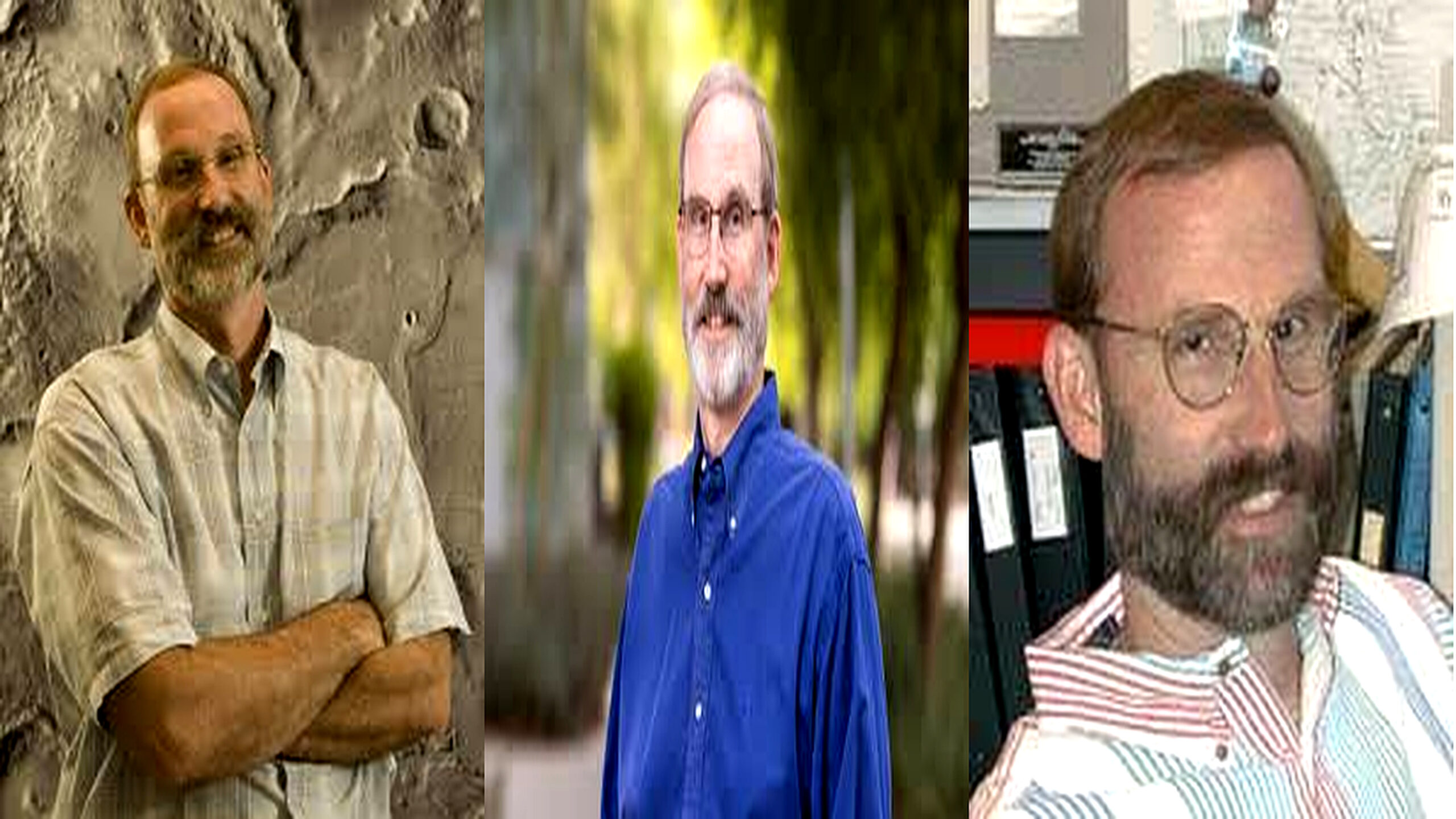
Key Highlights
- Phil Christensen is a Regents Professor and the Helen Korrick Professor in the School of Earth and Space Exploration at Arizona State University.
- He is a leading figure in planetary science, specializing in the geology and physical properties of Mars, asteroids, and other planetary surfaces.
- Christensen has been the Principal Investigator for multiple instruments on NASA missions, including the Mars Exploration Rover missions.
- His research has provided crucial insights into the composition and morphology of planetary surfaces, particularly Mars.
- He has a distinguished career marked by significant contributions to space exploration and collaborations with NASA.
- Beyond his scientific endeavors, there is another public figure named Phil Christensen, an American sound engineer.
Introduction
When you hear the name Phil Christensen, what comes to mind? For many, it’s a name synonymous with pioneering planetary science and the exploration of Mars. A distinguished professor at Arizona State University, he has dedicated his career to unraveling the secrets of our solar system. His work has been instrumental in major space exploration missions, shaping our understanding of distant worlds. This article will explore the remarkable career of this leader in science, highlighting his journey, key achievements, and lasting impact on how we view the cosmos.
Phil Christensen’s Background and Early Life
Exploring the life of a prominent scientist often reveals a path fueled by curiosity and dedication. Phil Christensen’s early life and academic journey laid the groundwork for a career at the forefront of planetary science. His developing research interests guided him toward becoming a leading expert in his field.
It’s interesting to note that while the focus here is on the scientist, the name Phil Christensen is also associated with a completely different field. Another Phil Christensen is known in the entertainment world as an American sound engineer, married to the famous British ice skater Jayne Torvill.
Now, let’s look closer at the influences and educational path that shaped the scientist Phil Christensen, as well as some noteworthy facts about the other public figure with the same name.
Academic Path and Influences in Science
The academic path of Phil Christensen, the planetary scientist, is a story of focused passion for understanding other worlds. His journey into geophysics and geology provided the essential tools to investigate the physical properties of planets. This foundation was critical for his future work, which would involve designing instruments capable of analyzing planetary surfaces from millions of miles away.
His career is deeply intertwined with Arizona State University (ASU), where he has been a central figure in the School of Earth and Space Exploration. At ASU, he has led numerous high-profile projects, cementing the university’s reputation as a powerhouse in space research. His leadership on missions like the Mars Exploration Rover project showcases his ability to translate scientific questions into tangible exploration hardware.
Through his work at ASU, Christensen has guided teams and mentored a new generation of scientists. His influence stems not just from his research but from his role as an innovator and principal investigator, turning complex scientific goals into successful missions that have reshaped our knowledge of the solar system.
Personal Interests and Noteworthy Facts
While the planetary scientist Phil Christensen is known for his work with NASA, the other Phil Christensen has a life tied to the world of entertainment and sports. This Phil is an American sound engineer married to the legendary British ice skater Jayne Torvill, who, with her skating partner Christopher Dean, won an Olympic gold medal.
Jayne Torvill sometimes shares glimpses of her family life on Instagram, including rare photos with her husband, Phil. Their life is quite different from the world of planetary science, filled with connections to the ice skating rink and public performances. The couple has been married for over three decades and has two adopted children, Kieran and Jessica.
Here are a few noteworthy facts about this Phil Christensen and his family:
- He married Jayne Torvill on September 21, 1990.
- His wife, Jayne, and her partner Christopher Dean are famous for their gold medal-winning “Bolero” routine at the 1984 Sarajevo Winter Olympics.
- The family includes two children and a Jack Russell dog named Lulu.
- His wife has openly discussed their journey to parenthood, including struggles with an ectopic pregnancy and IVF.
Career Milestones in Planetary Science
Phil Christensen, the scientist, has a career decorated with incredible milestones that have advanced planetary science. His research interests have consistently focused on Mars, leading to his involvement in some of NASA’s most ambitious projects. He has been a pivotal figure in missions that have landed on and orbited the Red Planet, contributing expertise in space physics and geology.
His work on the Mars Exploration Rover mission, for instance, was crucial for instrument design and the selection of scientifically rich landing sites. These contributions have provided a wealth of data, allowing scientists to piece together the history of water and climate on Mars.
Let’s examine some of his key contributions and the breakthrough discoveries that have defined his career, along with his extensive collaborations with NASA.
Key Contributions and Breakthrough Discoveries
Phil Christensen’s key contributions to planetary science are foundational to our modern understanding of Mars and other celestial bodies. He specializes in using thermal infrared spectroscopy to determine the mineralogy and physical properties of planetary surfaces. This technique has been a game-changer, allowing scientists to identify minerals that form in the presence of water, providing strong evidence for Mars’s wetter past.
His breakthrough discoveries include mapping the distribution of minerals like hematite on Mars, which directly led to the selection of the landing site for the Opportunity rover. His analysis of the morphology of planetary surfaces has also shed light on the geological processes that have shaped Mars and various asteroids over billions of years.
Christensen’s work involves leading the development and operation of sophisticated instruments for NASA missions. His leadership has ensured the success of these complex tools in the harsh environment of space.
| Mission/Instrument | Role | Key Scientific Goal |
|---|---|---|
| Mars Odyssey (THEMIS) | Principal Investigator | Mapping the mineralogy and morphology of the Martian surface. |
| Mars Exploration Rovers (Mini-TES) | Principal Investigator | Analyzing the composition of rocks and soils at the landing sites. |
| OSIRIS-REx (OTES) | Instrument Scientist | Characterizing the surface of the asteroid Bennu. |
Collaborations with NASA and International Missions
Collaboration is at the heart of modern space exploration, and Phil Christensen’s career is a testament to this fact. His long-standing relationship with NASA has placed him at the center of numerous flagship missions. Working from his base at Arizona State University, he has led teams that design, build, and operate instruments that fly on NASA spacecraft, turning scientific theory into practical exploration.
These collaborations extend beyond just one agency. While his primary work has been with NASA, the nature of planetary science often involves international partners, sharing data and expertise to maximize scientific returns from these costly and complex missions. His involvement helps bridge the gap between academic research and governmental space programs.
Christensen’s efforts have directly contributed to the success of several missions.
- He was the Principal Investigator for instruments on the Mars Exploration Rover missions, Spirit and Opportunity.
- He led the development of the Thermal Emission Imaging System (THEMIS) on the Mars Odyssey orbiter.
- He has also been involved with organizations like The Planetary Society, which promotes public engagement in space exploration.
Frequently Asked Questions (FAQ)
Curiosity about Phil Christensen often leads to several popular inquiries. Many wonder about his role at Arizona State University and his research interests, particularly in planetary science and Mars exploration. Others seek insight into his contributions to missions involving exploration rovers. Additionally, fans of ice skating frequently ask about his collaboration with Christopher Dean and their impact on the sport. Whether it’s about space physics or ice dancing, these questions reflect a deep appreciation for Phil’s diverse accomplishments.
What are Phil Christensen’s most significant research projects?
Phil Christensen’s most significant research projects include his role as Principal Investigator for instruments on the Mars Exploration Rover missions and the Mars Odyssey orbiter. His research interests in the morphology of planetary surfaces and mineralogy were instrumental in selecting the landing site for the Opportunity rover, a key moment in planetary science.
Has Phil Christensen received notable awards or recognition for his work?
Yes, Phil Christensen has received numerous awards and significant recognition for his contributions. At Arizona State University, he holds the title of Regents Professor and is the Helen Korrick Professor. While the Olympic gold medal belongs to the skater’s world, Christensen has been honored with NASA’s highest awards for his scientific achievements.
Is Phil Christensen involved with public outreach or science education initiatives?
Phil Christensen is active in public outreach and science education. He has worked with organizations like The Planetary Society to share the excitement of space exploration with the public. While he may not be a frequent user of social media like Instagram, his work is often featured on NASA and university YouTube channels.
Conclusion
Phil Christensen’s journey in planetary science is not just a testament to his expertise but also an inspiration for aspiring scientists. His contributions have shaped our understanding of celestial bodies and paved the way for future explorations. From his academic roots to groundbreaking discoveries, Phil exemplifies how passion and dedication can lead to extraordinary achievements. As we look to the stars, leaders like Phil remind us of the importance of curiosity and collaboration in advancing scientific knowledge. If you’re interested in learning more about his work or getting involved in planetary science, don’t hesitate to reach out and explore the universe together!