
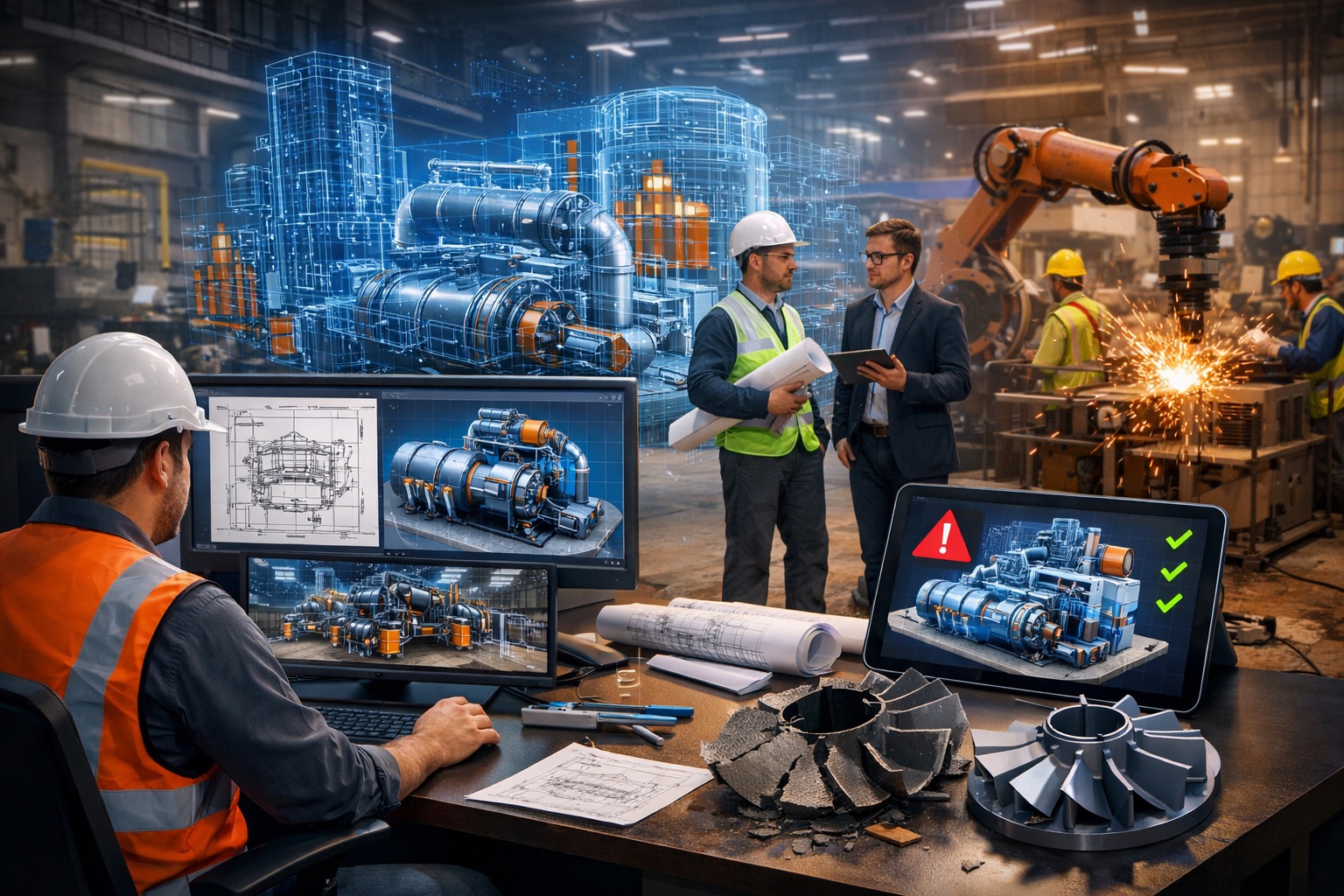
High-stake projects leave no room for guesswork.
Whether you’re designing a commercial tower in London, upgrading manufacturing facilities in the USA, or managing a multi-disciplinary infrastructure project, even a minor design error can snowball into cost overruns, compliance issues, rework, or legal disputes. And more often than not, these risks originate from outdated, inconsistent, or poorly converted design data.
This is where professional CAD conversion services quietly play a mission-critical role.
As projects become more complex and globally distributed, businesses, architects, engineers, and tech leaders are increasingly relying on accurate CAD conversion services to eliminate ambiguity, align teams, and reduce design risk before construction or manufacturing begins.
In this article, we’ll explore how professional CAD conversion services reduce design risk in high-stake projects, the latest industry trends shaping the CAD ecosystem in the USA and UK, and the real opportunities for companies that get conversion right from day one.
Why Is Design Risk a Growing Concern in High-Stake Projects?
Design risk isn’t new but it’s becoming more expensive.
According to a report by McKinsey, large construction and engineering projects typically run 20–45% over budget, with design errors and miscommunication among the top contributors. Similarly, Autodesk’s State of Design & Make Report highlights that over 60% of project delays are linked to poor data coordination and outdated design files.
Some of the most common design risk factors include:
- Legacy drawings in paper, PDF, or obsolete CAD formats
- Inconsistent file standards across teams and regions
- Manual redrafting errors during design updates
- Poor compatibility between software platforms
- Missing dimensions, layers, or metadata
When high-stake decisions are made using unreliable drawings, the consequences can be severe.
What Exactly Are CAD Conversion Services?
CAD conversion services involve transforming design data from one format to another while preserving accuracy, scale, layers, and intelligence.
This includes converting:
- Paper drawings or scanned images to CAD
- PDF files to editable CAD formats
- 2D drawings to intelligent 3D models
- Legacy CAD files into modern AutoCAD or BIM-ready formats
Professional providers deliver services such as:
- AutoCAD conversion services
- 3D CAD conversion services
- Raster-to-vector conversion
- PDF-to-DWG/DXF conversion
- CAD standardization and cleanup
Unlike basic file conversion tools, professional services apply engineering judgment, QA processes, and industry standards which is exactly how they reduce design risk.
How Do CAD Conversion Services Reduce Design Risk?
1. How Does Accurate Data Prevent Costly Errors?
Accuracy is the foundation of risk reduction.
Professional accurate CAD conversion services ensure:
- Correct scale and dimensions
- Proper layer structuring
- Consistent line weights and annotations
- Clean geometry free from overlaps or distortions
This accuracy matters because downstream teams, structural engineers, MEP consultants, manufacturers depend on this data to make real-world decisions.
A study by PlanGrid (now Autodesk Construction Cloud) found that rework accounts for up to 30% of construction costs, largely driven by inaccurate or outdated drawings. Accurate CAD conversions dramatically reduce this risk by ensuring everyone works from a single source of truth.
2. Why Is Standardization Critical for Global Teams?
High-stake projects often involve teams spread across the USA, UK, Europe, and Asia.
Without standardized CAD files:
- File naming becomes inconsistent
- Layers are interpreted differently
- Symbols and annotations cause confusion
Professional CAD conversion services normalize drawings according to:
- AutoCAD standards
- ISO or BS standards (common in the UK)
- Client-specific CAD/BIM guidelines
This standardization allows cad conversion services in USA to seamlessly integrate with UK-based architectural or engineering teams reducing misinterpretation and coordination risk.
3. How Do 3D CAD Conversion Services Improve Design Validation?
One of the biggest industry shifts is the move from 2D drawings to intelligent 3D models.
3D CAD conversion services help stakeholders:
- Visualize spatial conflicts early
- Detect clashes before construction or fabrication
- Validate design intent with non-technical decision-makers
- Improve coordination between architecture, structure, and MEP
According to Dodge Construction Network, projects using 3D modeling experience up to 50% fewer RFIs and significantly lower change orders.
In high-stake environments, the ability to “see before you build” isn’t a luxury, it’s a risk-mitigation strategy.
4. Can CAD Conversion Support Compliance and Regulations?
Absolutely and this is especially important in the UK and USA.
Professional CAD conversion teams ensure drawings comply with:
- Local building codes
- Industry regulations
- Accessibility and safety standards
- Documentation requirements for approvals
For regulated industries such as healthcare, aviation, or manufacturing, accurate CAD documentation is essential for audits, certifications, and legal defensibility.
Well-converted CAD files act as verifiable records, reducing compliance risk long after project completion.
Why DIY or Automated Conversion Tools Increase Risk
Free or low-cost conversion tools may look appealing but they often introduce hidden risks.
Common issues with automated tools include:
- Incorrect scaling
- Loss of layers and annotations
- Broken geometry
- No industry context or validation
These tools don’t understand design intent. They simply convert pixels, not meaning.
In contrast, professional AutoCAD conversion services apply human expertise, cross-checks, and QA workflows to ensure conversion accuracy aligns with real-world requirements.
For high-stake projects, the risk of “cheap conversion” far outweighs the short-term savings.
What Are the Latest Trends in CAD Conversion Services?
1. Increased Demand for Legacy Data Conversion
Many organizations still rely on decades-old drawings stored as paper or PDFs.
As digital transformation accelerates, there’s growing demand to convert legacy assets into usable CAD formats especially in infrastructure, utilities, and manufacturing sectors across the USA and UK.
2. CAD-to-BIM Readiness
While CAD remains dominant, projects are increasingly moving toward BIM.
Professional CAD conversion services now focus on:
- Clean, structured CAD files
- BIM-ready layering and metadata
- Smooth transition to Revit or other BIM platforms
This future-proofing reduces long-term design risk.
3. Remote Collaboration and Outsourcing
Global collaboration has normalized outsourcing CAD conversion to specialized teams.
Businesses in the UK increasingly partner with cad conversion services in USA and other global hubs to access expertise, speed, and cost efficiency without compromising accuracy.
Who Benefits Most from Professional CAD Conversion Services?
Professional CAD conversion isn’t just for large enterprises.
It delivers value to:
- Architects managing multi-disciplinary projects
- Engineers requiring precision and compliance
- Startups modernizing legacy data for scalability
- Manufacturers reducing production errors
- Tech decision-makers focused on risk, ROI, and efficiency
In high-stake projects, CAD conversion is no longer a support task, it’s a strategic decision.
How Do You Choose the Right CAD Conversion Partner?
When evaluating providers, look for:
- Proven experience in similar industries
- Clear QA and validation processes
- Knowledge of UK and USA standards
- Expertise in 3D CAD conversion services
- Transparent communication and delivery timelines
An accurate CAD conversion service doesn’t just deliver files it delivers confidence.
Final Thoughts:
In high-stake projects, risk rarely comes from bold decisions, it comes from bad data.
Professional CAD conversion services quietly eliminate many of the uncertainties that derail timelines, inflate budgets, and damage reputations. By ensuring accuracy, consistency, and clarity, they give decision-makers something invaluable: trust in their design data.
For organizations operating across the UK, USA, and global markets, investing in expert CAD conversion is no longer optional; it’s essential risk management.
Toward the end of your selection process, partnering with a leading UK-based CAD design and conversion company can offer the right balance of technical expertise, industry compliance, and long-term design reliability especially for projects where there’s simply no margin for error.
FAQs
1: What are CAD conversion services and why are they important?
Answer:
CAD conversion services transform drawings from formats like paper, PDF, or legacy CAD files into accurate, editable CAD formats such as DWG or DXF. They are important because they ensure design accuracy, consistency, and usability across teams especially in high-stake projects where even small errors can lead to delays, cost overruns, or compliance issues.
2: How do CAD conversion services reduce design risk in complex projects?
Answer:
Professional CAD conversion services reduce design risk by eliminating manual errors, correcting scale inconsistencies, standardizing layers, and ensuring drawings reflect accurate design intent. This helps architects, engineers, and contractors make decisions based on reliable data rather than outdated or incomplete files.
3: Why are accurate CAD conversion services critical for UK and USA projects?
Answer:
Projects in the UK and USA must meet strict building codes, documentation standards, and compliance requirements. Accurate CAD conversion services ensure drawings align with regional standards such as ISO, BS, and AutoCAD conventions, reducing approval delays and regulatory risk.
4: What is the difference between 2D and 3D CAD conversion services?
Answer:
2D CAD conversion focuses on creating precise technical drawings, while 3D CAD conversion services create detailed models that allow better visualization, clash detection, and design validation. High-stake projects increasingly rely on 3D conversions to identify issues early and improve coordination across disciplines.
5: Are AutoCAD conversion services better than automated conversion tools?
Answer:
Yes. AutoCAD conversion services provided by professionals use engineering judgment, quality checks, and industry standards. Automated tools often miss layers, distort dimensions, or lose annotations, increasing design risk especially in large or regulated projects.
6: Who should use CAD conversion services in the USA and UK?
Answer:
CAD conversion services in USA and UK are widely used by architects, engineers, construction firms, manufacturers, startups, and facility managers. Any organization working with legacy drawings or cross-border design teams benefits from accurate and standardized CAD files.
7: How do CAD conversion services support long-term project scalability?
Answer:
By converting legacy drawings into clean, structured CAD formats, CAD conversion services make it easier to update designs, integrate with BIM workflows, and reuse data for future expansions reducing long-term design and operational risk.