
Introduction to the Incident
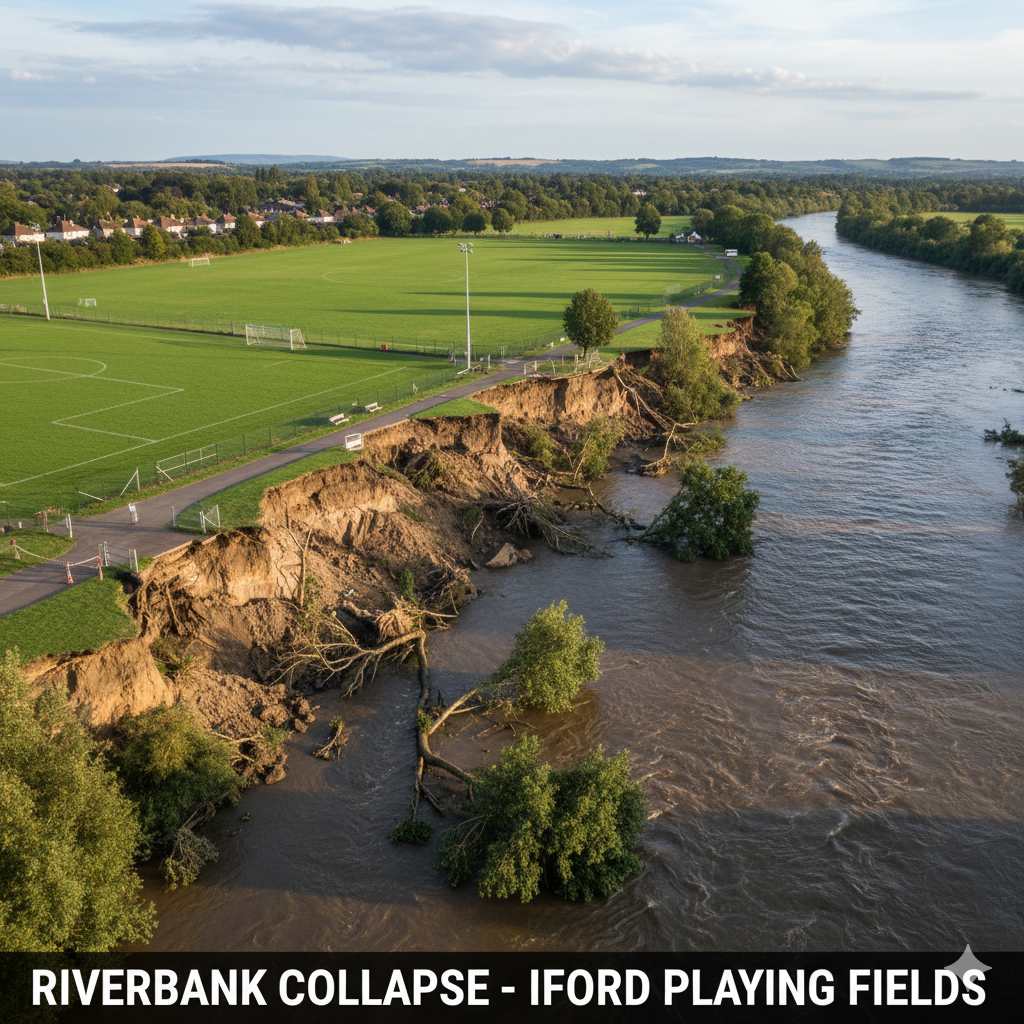
A sudden riverbank collapse at Iford Playing Fields has caught the attention of residents and local authorities alike. The incident, which occurred after periods of heavy rainfall, has raised concerns about safety, environmental impact, and the future of this beloved community space.
Location Overview – Iford Playing Fields
Importance to the Local Community
Iford Playing Fields serves as a vital recreational hub. Families, sports teams, and community groups rely on it for leisure activities, sports events, and social gatherings. The fields are not only a place for play but also a green space that contributes to the neighborhood’s well-being.
Features and Usage
The area includes football pitches, walking paths along the river, and open green spaces. Its proximity to the river adds scenic beauty but also introduces potential risks during periods of heavy rainfall or flooding.
What Happened – Riverbank Collapse Details
Timeline of the Collapse
Reports indicate that after days of rain, portions of the riverbank gave way, causing soil and debris to spill into the waterway. The collapse affected a stretch of the playing fields adjacent to the river, prompting authorities to close off affected areas immediately.
Initial Warning Signs
Residents had noticed soil cracking and minor slippages along the bank in preceding weeks, which may have indicated underlying instability. Local authorities are now reviewing these warning signs for future prevention.
Causes of the Riverbank Collapse
Natural Factors
Heavy rainfall, river erosion, and saturated soil conditions are common natural contributors to riverbank collapse. Water flow can gradually weaken the bank, especially after prolonged wet periods.
Human Activities and Environmental Stress
Activities such as nearby construction, foot traffic close to the river edge, and vegetation removal can exacerbate the instability of the riverbank. A combination of natural and human-induced factors likely contributed to the collapse.
Immediate Impact on Residents and Visitors
Safety Concerns
The collapse created hazardous conditions for visitors. Walking paths were partially destroyed, and parts of the playing fields were at risk of further erosion. Authorities urged the public to avoid the area until safety assessments were complete.
Disruption to Recreation
Sports matches, community events, and casual recreational use were temporarily halted. Local schools and clubs that frequently use the fields had to relocate activities elsewhere.
Environmental Consequences
Soil Erosion and Vegetation Loss
The collapse led to significant soil displacement and the uprooting of plants along the riverbank. This can have lasting effects on bank stability and ecosystem health.
Water Quality and Wildlife Effects
Debris and sediment from the collapse may affect water quality and disturb aquatic life. Local wildlife that relies on the riverbank may face temporary habitat disruption.
Response by Local Authorities
Emergency Services and Safety Measures
Authorities responded quickly by cordoning off the affected area, assessing risks, and advising residents. Emergency services ensured that no one was injured and that the site remained secure.
Assessment and Repair Plans
Engineers and environmental experts have begun evaluating the damage. Plans for stabilizing the bank include reinforcement works, planting vegetation, and potentially redirecting foot traffic to safer areas.
Community Reaction
Public Concerns and Awareness
Residents expressed concerns about safety, environmental impact, and the risk of future collapses. Social media and local meetings have helped keep the community informed and involved.
Volunteer Efforts
Local volunteer groups have offered assistance in monitoring the site, helping with minor cleanups, and raising awareness about erosion prevention.
Preventing Future Riverbank Collapses
Engineering Solutions
Solutions such as retaining walls, riprap, and terracing can reinforce vulnerable banks. Proper drainage systems also help manage water flow and reduce soil saturation.
Natural Reinforcement Techniques
Planting deep-rooted vegetation and preserving natural buffers along the river can strengthen soil and prevent future erosion while maintaining ecological balance.
Long-Term Implications for Iford Playing Fields
Impact on Sports and Recreation
The playing fields may require temporary reconfiguration, and certain areas might be restricted for safety until full restoration is complete.
Restoration and Landscaping Projects
Restoration efforts include reshaping the riverbank, planting native vegetation, and improving pathways to ensure a safe and attractive environment for future visitors.
Advice for Local Residents
Safety Precautions
Residents are advised to avoid walking close to the riverbank, especially after heavy rainfall. Reporting unusual cracks or slippages can help authorities take preventive action.
Monitoring and Reporting Risks
Community members are encouraged to participate in monitoring the area and notifying local councils of any potential hazards to prevent future incidents.
Environmental and Urban Planning Lessons
Sustainable Land Management
This incident highlights the importance of careful land management near waterways. Protecting natural vegetation and controlling development are crucial for long-term stability.
Flood and Erosion Preparedness
Planning for extreme weather events and implementing proactive erosion control measures can minimize the impact of similar events in the future.
Conclusion
The riverbank collapse at Iford Playing Fields serves as a reminder of the delicate balance between natural forces and community spaces. While the immediate impact caused disruption, prompt response and careful planning will restore safety and preserve the area’s recreational value. Investing in sustainable solutions will ensure that residents can continue to enjoy Iford Playing Fields for years to come.
FAQs
What caused the riverbank collapse at Iford Playing Fields?
Heavy rainfall, soil erosion, and environmental stress contributed to the collapse.
Is the area safe for public access now?
Authorities have cordoned off the affected area. Full access will resume after safety and repair assessments.
Will the playing fields be restored?
Yes, restoration plans include bank stabilization, vegetation planting, and pathway repairs.
How can residents help prevent future collapses?
Residents can report signs of erosion, avoid disturbing the riverbank, and participate in community monitoring efforts.
Are there environmental risks from the collapse?
Yes, soil displacement and debris can affect water quality and wildlife habitats, though restoration efforts aim to mitigate these impacts.